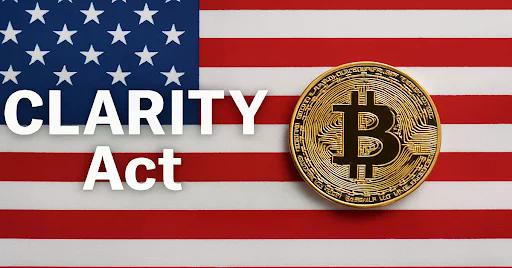
Senator Cynthia Lummis told the Bitcoin 2026 conference that the Lummis CLARITY Act warning centers not just on the 2030 timeline but on a structural argument: the current simultaneous alignment between the House, Senate, and White House on crypto legislation is genuinely rare in Washington and will not persist indefinitely if the May markup window is missed.
Lummis CLARITY Act remarks at the Bitcoin 2026 Conference in Las Vegas on April 27 moved beyond the 2030 timeline to make a structural argument about political conditions. Lummis told attendees that the current moment is defined by a rare coincidence: the House has already passed the CLARITY Act 294 to 134, the Senate Agriculture Committee has cleared its version, and the White House under Trump has publicly backed the bill as a national priority. “This kind of support is rare in Washington and may not last long,” Lummis said, framing the political window as the most consequential variable rather than the bill’s content, which she said is “almost 99% sorted out.”
The structural argument Lummis is making is distinct from the 2030 deadline warning. It is not only that the next Congress might not prioritize the bill. It is that the specific combination of a crypto-aligned House majority, a Senate Banking Committee with sufficient Republican votes, an SEC chair who has publicly said the agency is ready to implement the legislation, and a White House that has called the bill a national security priority does not assemble automatically and does not hold together indefinitely in an election cycle. A House flip in November, a shift in Senate committee composition, or a change in executive branch priorities could disassemble that alignment and require the industry to start from scratch under a new Congress with different incentive structures. As crypto.news reported, Lummis first issued the public 2030 warning on April 10 with an X post reading “This is our last chance to pass the Clarity Act until at least 2030. We can’t afford to surrender America’s financial future,” but the Bitcoin 2026 appearance adds the political alignment dimension: it is not just about the calendar but about whether this specific configuration of institutional will can be maintained.
The permanent legislative outcome Lummis is arguing for would convert the March 17, 2026 joint SEC-CFTC classification of XRP, Bitcoin, and Ethereum as digital commodities from a regulatory determination into binding federal statute. As crypto.news documented, the March joint taxonomy named 16 digital assets as digital commodities, representing approximately 78 to 80% of total crypto market cap. But that taxonomy is an executive action, subject to reversal by a future SEC chair or shift in White House priorities without any Congressional action required. The CLARITY Act would prevent that by writing the commodity classification into law. Standard Chartered has set an $8 XRP target contingent on the bill passing. JPMorgan has called midyear passage a positive catalyst for digital assets broadly. As crypto.news tracked, with the Warsh confirmation now resolved and the Banking Committee’s most pressing competing obligation removed, a May markup is structurally possible but requires Chairman Tim Scott to formally notice the bill for action and release the final text 48 hours before any committee vote.
The political alignment case is analytically more persuasive than the calendar case alone, because it explains why previous deadline misses did not produce the same consequence. In January, the deadline was missed because of stablecoin yield disputes. In April, the deadline was missed because the Warsh confirmation consumed the calendar. In both cases, the underlying conditions were still favorable: the White House still supported the bill, the Senate Republican majority was still intact, and the House text was still alive. If the May window is missed and the midterms change the political configuration, the conditions themselves change, not just the timeline. As crypto.news noted, Mike Novogratz said on a podcast this week that the bill “probably gets done in May,” but added explicitly that the political will behind it depends on the same tri-branch alignment Lummis described. Galaxy Research puts overall passage odds at 50-50 or lower for 2026.
Lummis chairs the Senate Banking Subcommittee on Digital Assets, chairs the BITCOIN Act effort, and has announced she will not seek re-election, making her one of the few senators with no personal electoral incentive to delay action on the bill.





 XRP
XRP BTC
BTC