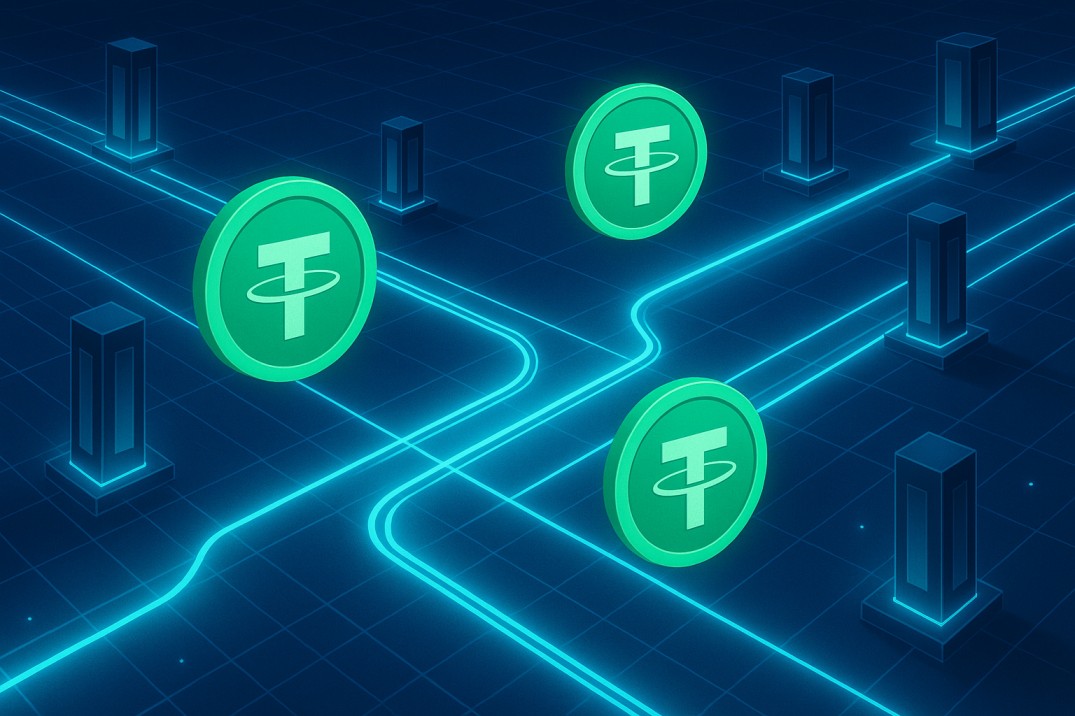



As of today, stablecoin has dominated real crypto usage. USDT alone settles billions every day across multiple blockchain, but none of those chains were originally designed to run USDT as a native asset. Stablechain enters this gap with a simple but bold idea: make USDT the gas, the settlement layer, and the default economic unit of the entire network.
Imagine a blockchain where everyday users never worry about gas volatility, validator rewards are paid in a stable currency, and the underlying token that secures the network operates more like an economic coordination asset than a fee token.
That is the architectural bet Stablechain is making, and it is this bet that raises an important long-term question: Can STABLE, a token that users do not spend, still capture value in a meaningful and sustainable way?
What STABLE Actually Represents in the Stablechain Design
Stablechain is a high-throughput Layer 1 built around USDT as the native gas token. This flips the traditional model where users must acquire a volatile coin (ETH, SOL, BNB) just to send stablecoins.
On Stablechain:
- USDT powers all transactions
- USDT pays validator rewards
- USDT is the default economic unit
So where does STABLE fit?
STABLE = Validator Security + Governance + Network Coordination
STABLE is not meant for everyday users. Instead, it powers the network’s security and long-term sustainability through:
- Validator staking
- Delegation and slashing mechanisms
- Protocol governance
- Ecosystem incentives and coordination
Users transact in USDT, while validators and network governors rely on STABLE. This makes STABLE similar to a coordination asset rather than a gas token.
What Drives STABLE’s Long-Term Value?
STABLE has a fixed maximum supply of 100 billion tokens, creating a clear upper limit. But more importantly, its value is shaped by network participation, not transaction demand.
Strengths Supporting Long-Term Value
- USDT-denominated rewards: Validators earn in USDT, reducing inflationary sell-offs.
- Staking lock-up: The more validators and delegators join, the fewer tokens remain liquid.
- Governance power: High-stakes holders influence protocol upgrades, treasury use, and economic policies.
- Ecosystem incentives: Future projects built on Stablechain may require STABLE for participation.
Challenges to Long-Term Value
- Users do not need STABLE to transact: This means transactional fees do not directly increase token demand.
- Value must come from security and governance: If validator participation is low, demand might lag behind network growth.
- Token unlock cycles: Depending on vesting schedules, early investor sell pressure could impact price.
Market Performance & Sentiment Indicators
To assess real-time interest in STABLE, LBank provides useful market data:
These indicators highlight early-stage volatility typical of newly launched L1 tokens. Key sentiment drivers include:
- Validator count and staking ratio
- Total transactions and USDT volume
- Developer activity and ecosystem growth
- Listing momentum (including LBank’s support)
- Incentive programmes for builders and delegators
If these indicators rise together, STABLE’s long-term narrative strengthens.
Who Stablechain Really Competes With
Stablechain’s goal isn’t to beat Ethereum or Solana in general-purpose programmability. Instead, it focuses on becoming the settlement layer for global USDT transfers.
This places it in direct competition with:
- Tron (currently dominates USDT transfers)
- Ethereum L2s (fast, cheap, growing stablecoin volume)
- Centralised exchange internal rails (extremely cheap stablecoin movements)
Stablechain’s Edge
- Predictable USDT-based fees
- Faster settlement times
- Architecture optimised purely for stablecoins
- A separation between user fees (USDT) and network security (STABLE)
If Stablechain becomes a preferred USDT rail, especially with ecosystem partnerships, STABLE could become a highly strategic asset.
Long-Term Token Value Scenarios
These are not investment predictions, just realistic outcomes based on network behaviour.
Bullish Scenario
Stablechain captures meaningful USDT volume, validator count grows, and ecosystem adoption accelerates. STABLE becomes a critical coordination token, rising in long-term demand.
Neutral Scenario
Moderate adoption, stable staking, and steady ecosystem growth. STABLE retains value but moves with market cycles.
Bearish Scenario
Growth slows, validator activity stagnates, and alternative L1s maintain dominance. STABLE becomes primarily a governance token with limited market demand.
The key variable is simple: security demand = token demand.
Major Risks Investors Should Consider
Even with strong design principles, STABLE carries meaningful risks:
- Dependence on USDT/Tether: Any regulatory or structural issue with USDT affects the chain directly.
- Validator concentration: Too few validators reduces decentralisation and governance credibility.
- Token unlocks: Large vested allocations could pressure the market.
- Ecosystem risk: Without apps, liquidity, and real users, demand remains speculative.
Final Thoughts
Stablechain introduces a refreshingly different idea: let a stablecoin power the network while a separate asset governs and secures it.
This separation creates strong UX advantages, but it also shifts value accrual from users to validators, meaning:
STABLE will only grow sustainably if the network becomes valuable and the security layer gains real economic importance.
So, can STABLE, a token that users do not spend, still capture value in a meaningful and sustainable way? Yes, STABLE can capture value in a meaningful and sustainable way, but only if the network’s security demand grows.
In other words, STABLE will only gain sustainable long-term value if Stablechain grows into a network that requires strong validator security and active governance.
If validator participation increases, USDT volume rises, and the ecosystem expands, STABLE becomes economically meaningful.
If those factors stall, STABLE will struggle to gain value because users do not need it for everyday transactions.