

Cryptocurrency
Investment & Trading

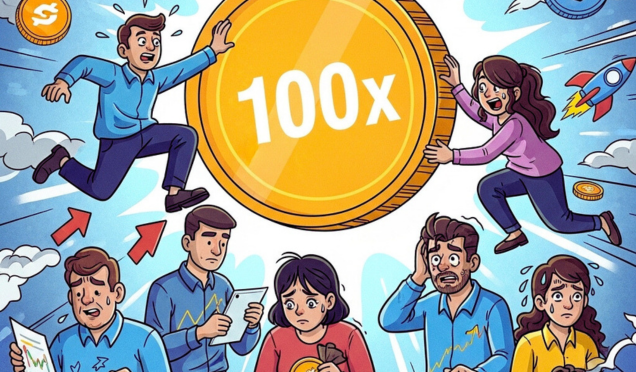
The Psychology of Crypto Investing: Why We Keep Chasing the Next 100x Coin.

abeebxbt
2025-12-03
This article examines the psychological forces that drive crypto investors to repeatedly chase high-risk "100x" coins despite frequent losses.

You've probably seen it. A coin goes up 1,000% in a week. Your Twitter feed explodes. Everyone's talking about the next big thing. You tell yourself you won't miss out this time.


So you buy in.


Then the price crashes. You're left wondering what happened. This cycle repeats over and over in crypto. Smart people make the same mistakes again and again. Why? Because investing isn't just about numbers and charts. It's about psychology. Let's talk about what's really going on in your brain when you chase that next 100x coin.

The Fear of Missing Out (FOMO)

FOMO is the biggest driver in crypto investing. It's that panicky feeling when everyone else is making money, and you're not.


You see posts about people turning $100 into $10,000. You watch coins pump while your portfolio stays flat. Your friend brags about their gains at dinner.


Your brain screams: "Get in now or miss out forever!"


This fear pushes you to buy at the worst times, usually, right before a crash. FOMO makes you skip research. You don't check the project. You don't look at the tokenomics. You just buy because others are buying. Remember the Squid Game token in 2021? It shot up by 45,000% in a few days. People rushed in because of the hype. Then the creators pulled the plug. Investors couldn't sell. The price went to zero. Pure FOMO trap.

The Greed Factor

Greed is FOMO's twin brother. But instead of fear, it's pure desire for more.


Let's say you bought a coin at $0.10. Now it's at $1. You've made 10x your money. A smart investor might take profits. But greed whispers: "What if it goes to $10?"


So you hold. The price drops back to $0.50. Now greed says: "Hold longer. It'll come back."


This is how people ride coins all the way up and all the way back down. Greed convinces you that more is always coming. It never feels like enough.


Bitcoin went from $1,000 to $19,000 in 2017. Many people held through the peak waiting for $50,000. Then it crashed to $3,000. They held all the way down because greed told them it would bounce back immediately.

Following the Crowd

Humans are herd animals. We feel safe doing what everyone else does. In crypto, this creates dangerous situations. When everyone buys, prices go up. That attracts more buyers. This cycle feeds itself until it breaks. The crowd isn't always wrong. But the crowd is usually late. By the time regular investors hear about a coin, the early money has already been made.


Think about Dogecoin in 2021. It pumped when Elon Musk tweeted about it. Millions of people rushed in because everyone else was. Many bought near the top at $0.70. Today, it trades much lower. The herd mentality cost them money.Following others feels safe. But in crypto, safety is often an illusion.

The Dream of Quick Wealth

Everyone comes to crypto with stories in their head. Stories about people who became millionaires overnight.


These stories are real. Some people did turn tiny amounts into fortunes. But for every success story, there are thousands of failures we never hear about.

The dream of quick wealth is powerful. It makes us believe we're special. We think: "I'm smart enough to find the next Bitcoin."


This belief makes us take bigger risks. We put rent money into meme coins. We ignore warning signs. We convince ourselves that this time will be different.

The truth? Life-changing gains are rare. They usually come from being early and lucky. Not from chasing what's already pumping.


The Memory of Past Wins

If you've ever made money in crypto, your brain remembers that feeling. The excitement. The validation. The rush.


This memory makes you chase that feeling again. Psychologists call this "positive reinforcement." Your brain wants to repeat the experience that gave you pleasure.


The problem? Each trade is different. Just because you caught one pump doesn't mean you'll catch the next one.


Many investors made money during the 2020-2021 bull run. Everything went up. People thought they were geniuses. Then 2022 came. The bear market destroyed portfolios. Those past wins? They created overconfidence that led to bigger losses.

The Gambler's Mindset

This is the belief that past events affect future odds. In crypto, it shows up in two ways.


First: "This coin has dropped so much. It has to bounce back." Wrong. A coin down 90% can drop another 90%. There's no rule saying it must recover.

Second: "I've lost on my last three trades. I'm due for a win." Also wrong. Each trade is independent. Past losses don't guarantee future wins.


Terra Luna investors learned this the hard way in 2022. The coin dropped from $119 to nearly zero in days. Many people kept buying the dip, thinking it had to bounce. It didn't. They threw good money after bad. The market doesn't care about your losing streak. It doesn't owe you a win.

The Emotional Roller Coaster

Investing in crypto is an emotional process. In crypto, prices fluctuate greatly. Your investments may double or be reduced by half within a day. These swings trigger powerful emotions:


  • Euphoria when prices pump
  • Panic when they dump
  • Regret when you sell too early
  • Despair when you hold too long


These emotions cloud judgment. You make decisions based on feelings, not facts. You buy when you're excited. You sell when you're scared. Both usually happen at the wrong time.


The emotional highs are addictive. Some people chase crypto volatility like a drug. The ups and downs provide stimulation that normal investing can't match.

How to Avoid Emotional Mistakes

You can't eliminate emotions when investing in crypto. But you can manage them. Here's how:


  1. Set rules before you invest. Decide your entry price, exit price, and stop loss before emotions kick in. Write them down. Stick to them.
  2. Take profits regularly. If a coin doubles, sell some. Lock in gains. This removes the temptation to hold forever. You'll sleep better, too.
  3. Avoid social media during high volatility. Twitter and Reddit amplify emotions. When prices swing, these platforms become echo chambers. Step away. Clear your head.
  4. Only invest what you can lose. If losing your investment would hurt your life, you've invested too much. Fear and desperation lead to bad decisions.
  5. Do your own research. Don't buy because someone else is. Understand what you're buying. Know the risks. Make informed choices.
  6. Keep a trading journal. Write down why you bought and how you felt. Review it later. You'll spot your patterns and learn from mistakes.
  7. Set time limits on decisions. Give yourself 24 hours before buying. Most urgent opportunities aren't that urgent. Time removes emotional heat.
  8. Diversify. Don't put everything into one moonshot. Spread risk across different assets. This reduces the emotional impact of any single investment.


Conclusion

Chasing 100x coins is natural. Our brains are wired for it. FOMO, greed, and herd mentality aren't weaknesses. It's human nature.


But understanding why you feel these urges gives you power. You can recognise when emotions are driving your decisions. You can pause. You can choose differently.


The goal isn't to stop feeling emotions. The goal is to stop letting emotions make your investment decisions.


Crypto can change your financial life. But not by chasing every pump. Not by gambling on meme coins. Not by following the crowd.


Real wealth in crypto comes from patience, research, and emotional discipline. It comes from understanding yourself as much as understanding markets.


The next 100x coin will come along. There will always be another one. The question is: will you chase it blindly, or will you make a clear-headed decision based on facts, not feelings?


Your portfolio will thank you for choosing the second option.

Live Chat
Customer Support Team

Just Now

Dear LBank User

Our online customer service system is currently experiencing connection issues. We are working actively to resolve the problem, but at this time we cannot provide an exact recovery timeline. We sincerely apologize for any inconvenience this may cause.

If you need assistance, please contact us via email and we will reply as soon as possible.

Thank you for your understanding and patience.

LBank Customer Support Team