



Investment & Trading
Cryptocurrency

Japanese Asset Managers Gear Up for Crypto: Investment Trusts and ETFs in Development

Japan’s top asset managers are preparing crypto trusts and ETFs ahead of regulatory changes, signaling institutional adoption of Bitcoin and Ethereum and opening the door to billions in new capital.

Japan's financial sector is changing as six of Japan's leading financial institutions are developing new cryptocurrency investment offerings totaling approximately $2.5 trillion in assets.


Daiwa, Mitsubishi UFJ, Nomura, SBI Global Asset Management, Asset Management One, and Amova are among the largest and longest-standing asset managers in Japan, and they are developing investment trusts and Exchange Traded Funds (ETFs) that will provide institutional and individual investors easy access to Bitcoin, Ethereum, and potentially other cryptocurrencies, following the anticipated changes in regulation through 2026.


Let's explore what is actually happening and why this is important for anyone who follows Japan's financial markets.

The Regulatory Shift Creating This Opening

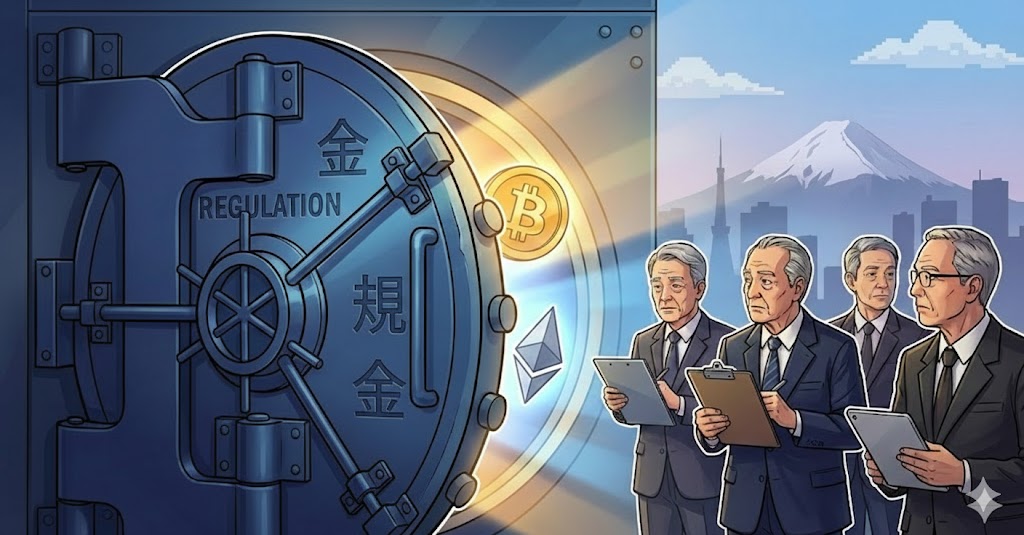
At this time, Japan's legal framework does not allow for any digital assets to be held via trust structures (i.e. Investment Trusts) or through other types of traditional investment vehicles (e.g. Investment Corporations), because of limitations imposed by the Act Regarding Trusts and Investment Corporations. Therefore, there is a significant obstacle facing many traditional asset managers who wish to create products for clients using digital currencies as an underlying asset class.


However, in 2026, Japan's Financial Services Agency plans to change the way that digital currencies are classified under the Financial Instruments and Exchange Act. The new classification will provide certain protections for investors similar to those currently available for investments in stocks and bonds; as such, the reclassification will fundamentally alter the way in which digital currencies are assumed to be secured in Japan's financial ecosystem. This now permits Japan to compete with alternative crypto solutions from both Singapore and Hong Kong.


Further, with the potential of this substantial regulatory change now being on the horizon, it allows asset managers who are interested in developing digital currency based investment products to gain a first-mover advantage in the marketplace prior to implementation of the change in law.

Who's Involved and What They're Planning

SBI Global Asset Management is at the forefront of the movement, planning to introduce Bitcoin and Ethereum ETFS, as well as multi-asset cryptocurrency trusts. The company anticipates that they will have created ¥5 trillion (around $32 billion) in assets during the initial three years after launching these products, showing a clearly defined vision of how blockchain demand will be. SBI President Tomoya Asakura explained that the potential for crypto products to help "unlock value" for consumers to transfer their savings into investment potential is in line with Japan's overall objective of encouraging households to invest rather than hold their savings in low-yield accounts.


Nomura Asset Management is by far Japan's largest wealth manager, managing 153 trillion yen in assets and holding 15% of the total market. Nomura, like SBI, has established an internal cross-division task force to develop product strategies for the post-regulatory-change landscape and does not simply wish to see what the market accepts, but rather has put up the infrastructure to enable them to incorporate cryptocurrencies as a part of their business model.


Daiwa Asset Management, which is managing around $213 billion (March 2024), has partnered with Global X Japan, an ETF specialist and expert in launching cryptographic ETFs in other markets, to help facilitate their technical and operational needs.


Mitsubishi UFJ Asset Management to one of the largest financial companies globally with managed assets of close to $2.7 trillion. They have actively explored blockchain and cryptographic solutions across a wide range of applications for many years, including building an interoperable stablecoin system. So, despite being relatively new entrants to the industry, they are not starting completely from scratch.


What do they have in common? They are all developing products that allow people to create a crypto trust aimed at retail and institutional investors.

What These Products Actually Are

An investment trust in Japan is more akin to a mutual fund, being a pooled resource that's managed professionally. In contrast, a "crypto investment trust" essentially acts in the same way, but instead invests directly into various types of cryptocurrency rather than stocks or bonds.


A common example would be an "ETF" (exchange-traded fund) which allows you the ability to buy and sell shares at any time during market hours (as opposed to only after hours). They also provide an avenue to invest into cryptocurrency without requiring any wallet, exchange, or private key holdings on behalf of the investor. All shares can be purchased through the investor's existing brokerage account.


As most of Japan's population is older than 60 years, it's expected that the vast majority of these investors do not have the necessary technological knowledge (such as understanding how to install a wallet app) or experience utilizing decentralized finance (DeFi) protocols. Therefore, it's more likely they would feel comfortable utilizing their local and trusted financial advisor to assist them when investing in Bitcoin ETFs.

The Market Context

Japan counts roughly 13 million crypto accounts held through local exchanges a substantial base of interest. For perspective, BlackRock's Bitcoin ETF reached $90 billion in assets in the US market by September. Japanese asset managers are watching those numbers and considering what similar demand might look like domestically.


The FSA appears supportive, with reports indicating the agency is considering allowing investment trusts that include cryptocurrencies, which could accelerate Japanese investment in crypto.


There's also a competitive angle. Japan's top asset managers want to integrate cryptocurrencies into investment trusts managing about $2.5 trillion in assets. That's enormous capital currently sitting on the sidelines of crypto markets.

The Challenges They're Facing

To manage their investors, asset managers must provide clear benchmarks on how much crypto assets will be sold through exchanges for short-term access, Create adequate secure Networks for Custodial Solutions, Create an entirely new Operational Infrastructure to support their Business Model, as the existing operational capabilities created by traditional Asset Managers were created for the purpose of managing traditional Investment Products and not necessarily crypto assets.


Additionally, the high levels of price fluctuation associated with Cryptocurrencies are another challenge to consider. According to Morningstar Japan's Daisuke Motori, Bitcoin's volatility is an issue when compared with other Traditional Investment Products (e.g., Stocks, Bonds or Gold). To provide Investors with confidence the Product will be a viable Investment, Asset Managers must communicate the Risk associated with the Cryptocurrencies while also presenting a Product that is Attractive as an Investment - this is a delicate balance to maintain.


Furthermore, Regulatory Approval is not guaranteed. Although the FSA has publicly made statements favorable to Cryptocurrencies and the related activities, there is still uncertainty regarding what the Final Rules surrounding the Regulatory approval will entail and whether they will incorporate any requirements or limits to how Products Should Be Offered.

What Success Would Mean

The impact of these products goes beyond Japan.


These are products that give legitimacy to digital currency in the second largest economy in Asia. When asset management companies with trillions in managed assets start offering crypto products, it shows the rest of the conservative asset management industry that digital currency is something that conservative Investors (perhaps institutional investors) who manage assets also utilize.


The amount of capital that could come into digital currency markets is likely to be enormous. Even a small percentage of allocations from Japanese Investors to Bitcoin and Ethereum is likely going to lead to billions of dollars of new capital injected into these markets.


This will make it far more competitive with other countries in southeast Asia in digital currency. By introducing these products to the market, it helps Japan recapture some of the ground it has lost to regional competition.


It will also act as a blueprint for traditional Banking institutions in France, England, the United States and Canada, and elsewhere. If Japan's Conservative Asset Management firms successfully enter the digital currency market and implement digital currency products, their peers in other countries will find it easier to justify doing the same.

The Timeline: Crypto Trusts and ETFs

While no specific timeline exists, regulatory implementation appears forthcoming, suggesting potential launches within 12-18 months. Products could begin launching as early as 2026 if everything stays on course legislatively.


Companies are preparing now to expedite launches once regulations are enacted. Nobody wants to be six months behind competitors when the market opens.

Final Thoughts

Japan's traditional finance sector is shifting toward a more positive view of digital assets. Daiwa, Mitsubishi UFJ, Nomura, and SBI aren't treating crypto as side projects—these are strategic initiatives with internal task forces, expert partnerships, and ambitious growth targets.


The regulatory structure is evolving. Tax reforms are coming. Infrastructure is being built at an increasing pace as demand rises from retail investors wanting easier crypto access and institutions awaiting regulated products.


Success depends on regulatory follow-through, favorable market conditions, and actual investment from Japan's traditional investment community when products launch.

But the momentum is real. Japan's traditional financial institutions are actively building infrastructure to support clients' use of crypto assets. Given the significant wealth these institutions manage, Japan could become a key leader in digital asset adoption.


The world should watch Japan in 2026. While crypto-native companies were expected to lead, it may be Japan's oldest, most established financial institutions that ultimately capture and control the crypto narrative.

Live Chat
Customer Support Team

Just Now

Dear LBank User

Our online customer service system is currently experiencing connection issues. We are working actively to resolve the problem, but at this time we cannot provide an exact recovery timeline. We sincerely apologize for any inconvenience this may cause.

If you need assistance, please contact us via email and we will reply as soon as possible.

Thank you for your understanding and patience.

LBank Customer Support Team