



Japan Moves to Classify XRP as a Financial Product
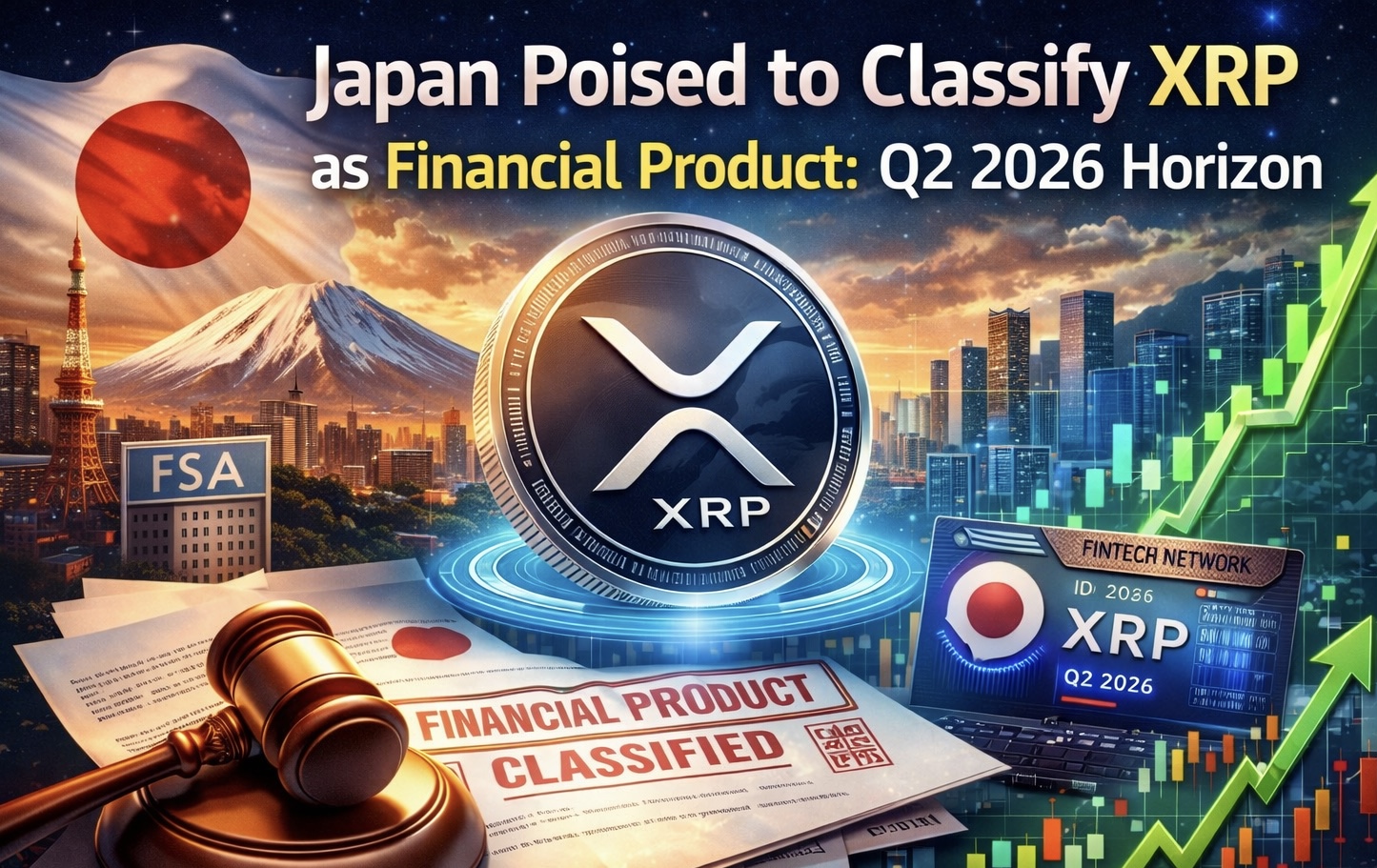
Japan, renowned for its forward-thinking approach to cryptocurrency, is on the cusp of a regulatory milestone by classifying Ripple’s XRP as a financial product. This shift, anticipated for implementation in Q2 2026, underscores the nation’s commitment to integrating digital assets into its robust financial ecosystem. Market analyst Xaif Crypto has highlighted this development, positioning XRP under the Financial Instruments and Exchange Act (FIEA) to enhance clarity and security in the crypto space.
Japan’s Regulatory Shift: From Crypto Asset to Financial Instrument
The contemplated reclassification of XRP from a crypto asset under the Payment Services Act to a financial product under the Financial Instruments and Exchange Act (FIEA) marks a significant turning point for digital asset legislation within Japan. Historically, most digital currencies have been classified as crypto assets under the Payment Services Act; however, moving XRP's classification to that of a financial instrument creates a new level of regulatory scrutiny and will require exchanges to obtain a license to operate; furthermore, it also imposes sophisticated Know Your Customer (KYC) and Anti Money Laundering (AML) guidelines and offers several new protections to investors (including institutions). The new classification creates a clear regulatory framework that will allow exchanges and consumers to trade XRP with less uncertainty compared to the current global cryptocurrency markets, which can experience significant price volatility.
What XRP’s Reclassification Means for Adoption and Institutions
A classification of XRP in relation to traditional financial instruments may lead to increased potential for institutional adoption of XRP in Japan. Larger corporations that are interested in Blockchain technology and solutions will find it easier to integrate XRP into their operations, whether that is through cross-border transaction processing activities or through the use of tokenized assets. The regulatory guidance provided could also encourage international investors to invest in XRP, thereby increasing market confidence in XRP and also creating increased utility for XRP. As Japan begins to utilize the XRP Ledger as part of its growing tokenized economy, this classification may lead to quicker innovation of in-real-life-use cases, including but not limited to improved efficiency of remittances and Decentralized Finance Solutions.
Why Japan’s XRP Decision Could Influence Global Crypto Policy
The way Japan is likely going to define XRP under FIEA may encourage many other countries to follow a similar blockchain regulation pathway. Typically, regulatory uncertainty inhibits the growth of an emerging industry. The proactive approach taken by Japan serves as an example of how tighter rules can coexist with the continued emergence of technological innovation. Japan’s FIEA, as opposed to other countries where there are looser frameworks, establishes accountability within the cryptocurrency ecosystem, therefore reducing the impact of fraudulent behaviour and market manipulation. For individuals that own XRP and developers of XRP, the Japan FIEA presents a more mature market where compliance can lead to a mainstream integration of the technology.
How XRP Fits Into Japan’s Tokenized Economy Strategy
A forward-looking view towards 2026, the initiative supports the Japanese strategy for a tokenized economy that has strong foundations of security. The XRP Ledger provides the fastest speeds and best scalable capacity to support digital transformation activities within various industries ranging from Supply Chain Tracking to Financial Inclusion, etc. Furthermore, with enhanced protections through the Financial Instruments and Exchange Act ("FIEA"), there is an opportunity to acquire a greater number of retail investors and increase retail investor participation in these markets while mitigating risk and volatility. Globally, this will also impact the perception of regulators regarding utility tokens and create an environment where other countries may view utility tokens in a manner that recognizes the dual goals of providing a balance between innovation and stability.
Q2 2026 Outlook: Market Expectations for XRP in Japan
As we await the launch of XRP in Q2 2026, Japanese XRP Classification Stakeholders remain very positive about its impact and will be watching for any potential developments that will directly affect XRP’s status within the financial industry. In addition to cementing Japan's place as a leader in cryptocurrency, the Classification will expand the role of XRP as a financial product. Investors who are keeping track of developments related to XRP as a financial product in Japan should keep an eye out for official announcements regarding the Classification and may see both price movement.