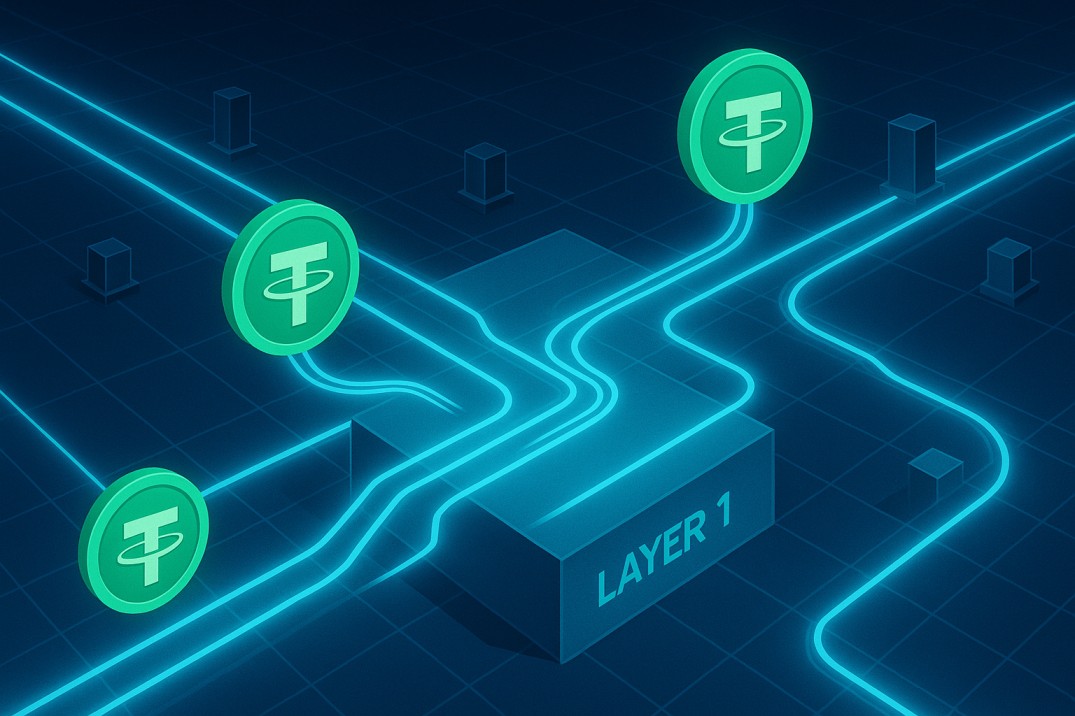



Stablecoins have quietly become the backbone of global crypto activity. Every day, billions of dollars in USDT flow across networks like Tron, Ethereum, and various Layer 2s. Yet none of these blockchains were designed with stablecoins as their native unit. Users must still acquire volatile gas tokens, navigate unpredictable fees, and rely on network mechanics that were built long before stablecoins became dominant.
Stablechain takes a fundamentally different approach.
It introduces an architecture where USDT itself becomes the gas, the settlement currency, and the default medium for all on-chain activity. Instead of stablecoins adapting to blockchain constraints, Stablechain redesigns the blockchain around stablecoins.
This shift from volatility-based gas to stable-value gas has profound implications for user experience, transaction efficiency, validator incentives, and long-term ecosystem growth.
To understand how this model affects the STABLE token, users can also explore its market performance and fundamentals on LBank.
In this article, we break down how Stablechain works, why it matters, and what it means for the future of stablecoin settlement.
What Makes Stablechain Different?
Most blockchains were not designed with stablecoins as the primary unit of activity. Users still need volatile tokens like ETH, SOL, or BNB to move their stablecoins. This creates friction, unpredictable fees, and unnecessary complexity. Stablechain takes a different route by making USDT the native gas token. This single design choice creates several major advantages:
Users Pay Fees in USDT; Not in a Volatile Asset
No need to hold or top up a secondary gas token. No exposure to price swings just to make a simple transfer.
Predictable and Stable Gas Fees
Because USDT has a fixed value, transaction costs remain predictable. Businesses, remittance platforms, and payment processors can calculate fees with confidence.
Validator Rewards Are Paid in USDT
Instead of inflationary token rewards, validators earn a stable currency. This aligns incentives and reduces selling pressure on the native token (STABLE).
Clean Separation of Roles
- USDT = Gas + Settlement + User Activity
- STABLE = Security + Governance + Network Coordination
This prevents conflicts between user experience and token economics.
A Blockchain Optimised for Stablecoin Dominance
Stablechain is built specifically for high-volume, low-volatility transactions. Its architecture focuses on speed, predictable costs, and stable settlement flows, something existing networks weren’t designed around.
A Simple Breakdown on How Stablechain Works
Stablechain is designed around one core idea: let USDT power the network. Here’s how the system works in a simple, easy-to-understand flow.

USDT is the Native Gas Token
Every transaction transfers, contract calls, payments uses USDT as gas. Users don’t need a secondary token or worry about volatile gas fees.
Validators Secure the Network Using STABLE
While users operate in USDT, validators stake STABLE to participate in block production. This stake can be slashed if they behave maliciously, ensuring honest behaviour.
Validators and Delegators Earn Rewards in USDT
Unlike other blockchains that pay rewards in their native volatile token, Stablechain pays rewards in USDT. This makes validator income predictable and reduces inflation risk.
STABLE Handles Governance and Network Coordination
STABLE isn’t for gas, it’s for security and decision-making:
- Governance voting
- Parameter adjustments
- Protocol upgrades
- Incentive programmes
This separates user activity (USDT) from network security (STABLE).
Transactions Settle Directly in USDT
Because the gas, settlement, and reward assets are all USDT, the network becomes a specialised rail for stablecoin movement.
This results in faster, simpler, and more predictable stablecoin settlement.
Applications Build on Top of Stablecoin-Native Infrastructure
DApps, payment systems, remittance services, and merchant platforms can plug into a chain that is:
- Stablecoin-centric
- Efficient
- Low-volatility
- High throughput
Making Stablechain ideal for financial use cases like payroll, payments, and cross-border transfers.
Why This Matters: The Bottleneck with Current Stablecoin Infrastructure
Today, stablecoins are the most-used assets on multiple chains, but they face hidden friction:
- On Ethereum: Gas spikes make settlement expensive and unpredictable.
- On Tron: Low fees exist, but the network isn’t built around stablecoin-specific optimisation.
- On Layer 2s: Users still need ETH for gas, reducing accessibility. Stablechain removes these bottlenecks by offering:
- Predictable, low, stable-value gas fees
- A dedicated throughput path for stablecoin transfers
- SDT-native economics that align with global usage patterns
This makes Stablechain particularly attractive for:
- Payments
- Remittances
- Merchant settlement
- On-chain payroll
- Off-chain financial integrations
Validator Economics Under the USDT-Gas Model
Validators play a crucial role in network security. Stablechain’s reward structure is different from typical L1s:
Validators Earn in USDT, Not STABLE
This gives three major advantages:
- Predictable revenue (not tied to token volatility)
- No inflation pressure on STABLE
- Healthier staking economics
Meanwhile, validators must stake STABLE to secure the network. This means the security model still relies on a native token, but the reward and usage model rely on USDT.
This hybrid architecture gives Stablechain a unique economic equilibrium.
Where Can Stablechain Fit in the Market?
Stablechain is entering one of the most active sectors in crypto: stablecoin settlement. Today, USDT is the most transacted digital asset in the world, yet the infrastructure it relies on was never designed specifically for stablecoins. This leaves a large, underserved niche that Stablechain aims to fill.
Here’s where Stablechain fits in the current blockchain landscape:
Competing With Tron
Tron dominates global USDT transfers because of:
- Low fees
- Fast confirmation times
- Simple architecture
But Tron still uses a volatile-energy model and has limitations that Stablechain improves on:
- Stable gas fees (USDT)
- Cleaner UX for payments and remittances
- Validator rewards in a stable currency
A Simpler Option Compared to Ethereum & Layer 2s
Ethereum and its L2 rollups are powerful, but stablecoin activity on them faces challenges:
- Users still need ETH for gas
- Fees can spike during network congestion
- Not every business wants the complexity of EVM environments
Stablechain fits the “payments-first” category:
- Lightweight
- Predictable
- Fast
- USDT-native
A Real Competitor to Centralised Exchange Rails
Exchanges like Binance, Bybit, and OKX move huge amounts of stablecoins internally with near-zero cost.
They are, in many ways, the biggest stablecoin settlement networks today, but they are closed systems.
Stablechain offers a public-chain alternative with:
- Lower fees
- USDT-native settlement
- Transparent finality
- No need to rely on a centralised intermediary
Strong Fit for Remittances and Cross-Border Payments
Because all fees and settlement occur in USDT:
- Migrant workers
- Payment providers
- Payroll systems
- Merchant settlement platforms
…can all benefit from predictable stable fees and instant settlement.
This is a major market; remittances alone exceed $860 billion annually, and crypto rails already process billions of it.
Stablechain can position itself as a specialised, reliable backbone for these flows.
Ideal for Fintech Integrations and Merchant Payments
Businesses prefer stability, not volatility. Stablechain aligns perfectly with this need:
- Gas never fluctuates
- Fees are easy to integrate into pricing models
- Settlement is in the same asset used for invoicing
It becomes a natural choice for:
- On-chain payroll
- Subscription billing
- Merchant crypto acceptance
- USDT-denominated invoicing
A Niche Layer 1 With a Clear Purpose
Stablechain is not trying to be:
- A DeFi-heavy ecosystem
- A general-purpose smart contract platform
- A speculative token playground
Instead, it positions itself as a purpose-built settlement layer optimised for stablecoin movement.
The Strategic Significance of USDT as Gas
Using USDT as the native gas token is the most defining feature of Stablechain, and it fundamentally reshapes how users, developers, and businesses interact with the network. This choice eliminates many pain points created by volatile gas tokens and aligns the chain directly with real-world usage patterns.
Here’s why this design is strategically important:
Predictable Fees Create a Better User Experience
On most blockchains, gas fees fluctuate based on market volatility. This creates friction for everyday users who simply want to send stablecoins.
With USDT as gas:
- Fees are easy to understand
- Costs remain stable
- Users avoid exposure to volatile assets
No Need for a Secondary Gas Token
Blockchains traditionally require users to hold two assets:
- The stablecoin they want to send
- The native gas token used for fees
This often confuses new users and creates onboarding friction.
Stablechain removes this entirely:
- Users only need USDT
- No swapping
- No topping up gas
- No managing a portfolio just to transact
Businesses and Payment Systems Get Predictable Cost Structures
Merchants, remittance companies, payment providers, and payroll operators need consistent fees. Volatile gas breaks financial modeling.
Stablechain solves this by making gas:
- Stable
- Formula-based
- Budget-friendly
Stable Rewards Improve Validator Economics
Validators earn USDT, not a volatile token. This gives them:
- Predictable income
- Less reliance on token pumps
- Lower exposure to market downturns
- A stable reward system aligned with real transaction value
Strengthens Stablecoin Network Effects
USDT is already the most used asset in crypto. Making it the gas token:
- Deepens its utility
- Increases transaction volume
- Strengthens the on-chain stablecoin economy
- Creates a positive feedback loop for adoption
Aligns Blockchain Activity With Real Economic Behaviour
Most crypto transactions are not speculative trades, they are stablecoin transfers. USDT-as-gas aligns crypto infrastructure with actual human behaviour:
People want:
- Stability
- Simplicity
- Predictability
Removes the Dependency on Volatile Token Prices
On traditional blockchains:
- Gas becomes expensive during market pumps
- Gas becomes cheap during downturns
- Users constantly feel the effect of token volatility
Stablechain’s model:
- Keeps fees stable
- Protects users from market shocks
- Makes settlement infrastructure independent of speculation
A New Architecture for the Next Stage of Stablecoin Adoption
Stablechain’s USDT-gas Layer 1 architecture reframes what a blockchain can be:
- Not a platform for speculative activity
- Not a general-purpose smart contract playground
- But a specialised, efficient settlement layer built around the asset most people actually use
By separating user activity (USDT) from economic security (STABLE), Stablechain creates a design that resembles real-world financial systems, with stable money for users and governance assets for operators.

Why This Architecture Matters:
- Users interact only with USDT: No need for ETH-like tokens, reducing friction and improving UX .
- Validators rely on STABLE for security: Clear separation between usage and security stabilizes token economics.
- Settlement and gas become stable: Ideal for payments, remittances, payroll, financial apps, and global commerce.
- Designed for the real world: Most crypto users already rely on stablecoins; Stablechain simply builds the infrastructure around that reality.
Final Thoughts
Stablechain represents one of the most significant architectural shifts in blockchain design since the rise of stablecoins themselves. By making USDT the foundation of gas, settlement, and validator rewards, it removes the volatility-based limitations that have long made stablecoin transfers more complex than they should be.
At the same time, the STABLE token provides a dedicated layer for governance and security, creating a balanced economic system that separates user experience from validator incentives.
This model positions Stablechain not as a competitor to general-purpose platforms but as a purpose-built settlement layer for the digital economy, a chain designed around how people and businesses actually use crypto today. If stablecoin adoption continues to accelerate, networks that prioritise stability, predictability, and simplicity will become critical infrastructure.