


Safety

From Data Leak to Real-World Danger: France’s Crypto Tax Breach Turns Deadly

France’s crypto tax database was allegedly sold for €800 per person, fueling kidnappings and wrench attacks. The breach shows how compliance records can become criminal target lists.

A Crypto Tax Leak Triggers Violent Kidnappings in France

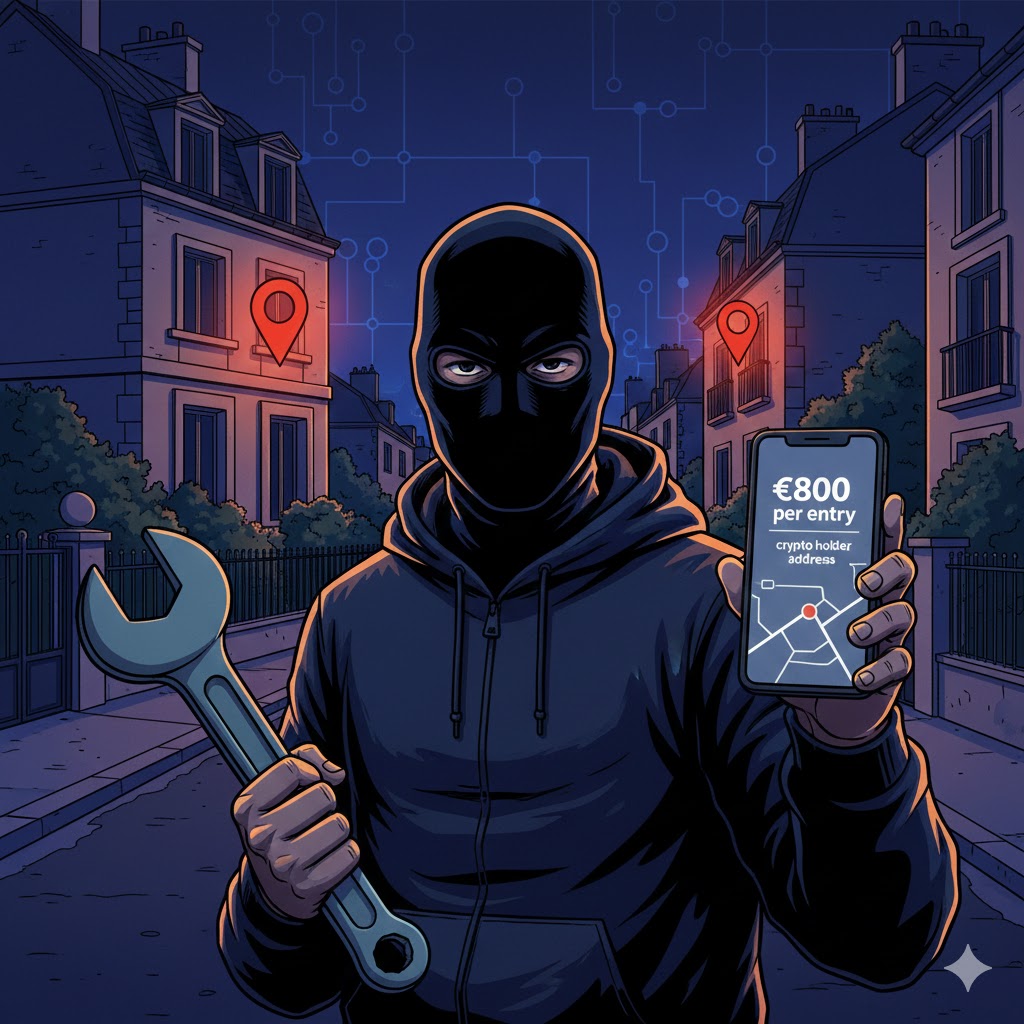
A tax leak in France of the crypto market could result in armed home invasions and identity theft. On 6th January 2026, a woman from Manosque, France was captured and bound by armed men who demanded to know the location of her partner's crypto keys stored on a USB stick. After relinquishing his crypto assets, a 43-year-old architect was beaten, kidnapped, and dumped 50 km away from his home 24 hours later. The following day, a crypto executive, along with his wife and children, were viciously attacked and tied up in Verneuil-sur-Seine, before their escape. In four days, there were four reported attempted abductions. With data leaks from privacy protective agencies, organised criminal activity is on the rise due to the ability to systematically target the most vulnerable individuals. Alleged to have provided data on crypto holders from government databases, Ghalia C., 32, who worked for the French tax authorities, was caught selling this information for €800 per entry to these criminal networks.

When Government Databases Become Criminal Hit Lists

At Ghalia's tax office in Bobigny, France, she had access to a special government program called "Mira" which has information about everyone's crypto assets. Ghalia reportedly accessed this system and retrieved file information on individuals who invest in cryptocurrencies, including their names and locations, as well as the money that they made from investing in cryptocurrencies. The prosecutor's office alleges that Ghalia sold this confidential information to an unnamed party that reportedly intended to carry out violent acts against those who hold crypto and have properly filed taxes on what they earned from crypto. Investigators found that Ghalia received cash and wire transfers from Western Union, which appear to have been payments from the masked group for killing individuals who have filed taxes on their cryptocurrency:


In September 2024, armed men assaulted a corrections officer at his home in Montreuil, France. The investigation was launched because Ghalia provided them with the officer's home address based on information she found through unauthorized access to the "Mira" programme at the tax office. According to records, the masked assailants were paid €800 for the attack on the corrections officer in relation to a prison phone dispute. Ghalia's computer was also found to contain questions regarding billionaire Vincent Bolloré, multiple health department officials, judges, and many crypto investors. Despite her arrest, Ghalia has refused to encrypt her phone and disclose the identity of the individual who financed her actions. Her request to be released from custody was denied on January 6, 2026. The attorney general has stated about Ghalia that "She has acted as a seasoned criminal in an unusual manner and belongs in prison."

France Becomes a Global Hotspot for Crypto Wrench Attacks

In France, the number of physical violent crimes related to cryptocurrencies is on the rise. According to an analysis by Jameson Lopp in 2025, France had ten of the 48 wrench attacks (about 25 percent) worldwide. Wrench attacks are classified as violent physical assaults aimed at stealing Bitcoin. The global total of physical assaults related to cryptocurrencies in a year-and-a-half reached at least 231, with six fatalities attributed to the violence associated with the crime. Kidnappings accounted for approximately $128 million of the total $166 million stolen through violent cryptocurrency-related crimes between 2022 and 2025.


A notable victim of the surge of violent crimes related to cryptocurrency was David Balland, the co-founder of Ledger. He and his wife were kidnapped from their home in Vierzon in January 2025. During the kidnapping, David was tortured and had his finger severed as part of a ransom demand. After being rescued, he updated his X profile with the images, "2025 Kidnapping Championship" and "Fingers: 9/10."


Pierre Noizat was another man whose daughter and granddaughter were almost kidnapped. In May 2025, there was an attempted kidnapping of his daughter and granddaughter at 8:20 in the morning in Paris. Pierre's son-in-law was injured while attempting to protect them. Another passerby attempted to intervene when he saw the attempted kidnapping. An innocent bystander used a fire extinguisher to stop the would-be kidnappers. The attack was filmed and posted on social media, bringing more attention to the vulnerability of the community and the prevalence of crypto-related crimes.

The Compliance Trap: How Crypto Regulation Enables Targeting

France requires crypto holders to report assets for tax and anti-money laundering reasons. These criteria establish extensive ownership databases that become targeted lists when controls fail. Ghalia C. shows the vulnerability: compliance centralises digital asset ownership and location. Tax officials can sell this data for €800, weaponising the regulatory system.

Farokh said: "We're now at 4 kidnapping attempts in 4 days in France after finding out a government employee was giving 'sponsors' information on crypto tax payers." Reporting crypto assets raises physical risk because government databases are unreliable.


A separate dark web attack revealed over two million French citizens' tax data in May 2025. French investors confront foreign hackers and compromised insiders in addition to Ghalia C. 's exploitation. Other officials are being investigated for compromise.

The Permanent Shift in Crypto Security Calculus

Permanent threats include physical violence. Wrenches aren't code-patchable like smart contract exploits. Understanding crypto holders and their locations is the vulnerability and attack vector. Security expert Phil Ariss says, "That means not talking publicly about holdings, not displaying lifestyle markers that might flag you as a target."


employ pseudonyms, restrict online exposure, avoid public wallet disclosure, and employ multi-signature configurations. For private security, several French crypto leaders pay over $50,000 per month. Ledger co-founder Eric Larcheveque has cameras and weapons at home and wants CEOs to carry guns.


Conferences cancel due to violent normalisation. NFT Paris and RWA Paris 2026 were cancelled due to market conditions and concern. Compliance becomes cooperation in your own targeting when government databases reveal crypto holder data to criminals. The crypto wallet security technology works great. Institutions protecting wallet holders have failed catastrophically.

Live Chat
Customer Support Team

Just Now

Dear LBank User

Our online customer service system is currently experiencing connection issues. We are working actively to resolve the problem, but at this time we cannot provide an exact recovery timeline. We sincerely apologize for any inconvenience this may cause.

If you need assistance, please contact us via email and we will reply as soon as possible.

Thank you for your understanding and patience.

LBank Customer Support Team