



Cryptocurrency
Blockchain Technology

From Tokenized Money to Crypto-Urbanism: Central Asia Fintech Summit 2025 Recap

The Central Asia Fintech Summit 2025 explored tokenized money, crypto-urbanism, and how fintech innovation is reshaping cities, economies, and regional growth.

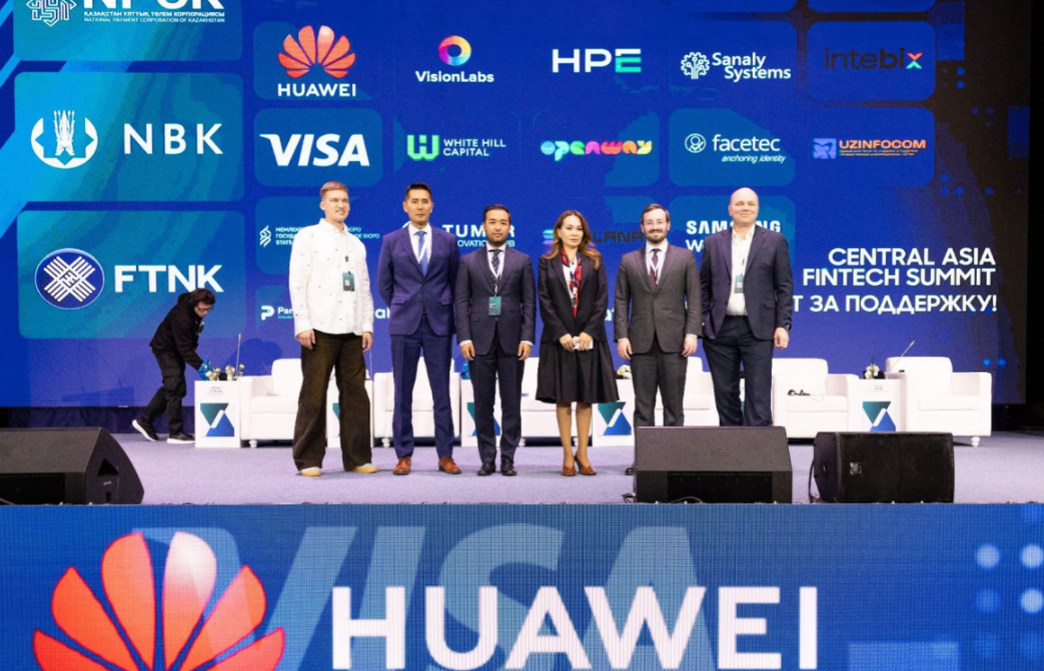
As the fintech industry in the areas of innovation and disruption have continued to grow globally on the back of technology evolution, many organizations are now moving towards developing systems that are compliant, scalable and interoperable, to meet the increasing demand of consumers. This was a promise that was fulfilled at the 2025 Central Asia Fintech Summit which focused on Kazakhstan becoming one of the leading nations to contribute to the evolution of Digital Payments by hosting an event with key central banks, regulators and innovators from the region. The Central Asia Fintech Summit was a clear demonstration of how countries within the region are working towards being able to achieve both innovation and stability on a market level that will lead to the longer-term viability of the payments industry and beyond.


The Central Asia Fintech Summit was held at the highly regarded Royal Tulip Hotel in Almaty, Kazakhstan on November 13-14, 2025. Aside from hosting the Central Asia Fintech Summit, it was also a great opportunity to exchange and share innovative and adaptive ideas, strategies and insights that will help fuel future fintech growth in Kazakhstan, as well as globally. The hotel was filled with the hustle and bustle of fintech authors, entrepreneurs and industry professionals, and drew more than 3000 registered participants, including over 120 speakers from various industries. The Central Asia Fintech Summit demonstrated Kazakhstan's desire to be a leading country in the area of fintech by creating compliant frameworks that support economic resilience and consumer protection.

Navigating Regulation: Innovation Meets Stability

The plenary sessions at the summit began with an overarching discussion point, "How can we foster innovative practices within the Fintech ecosystem on a global scale, while at the same time maintaining user protections and preserving financial stability?" This inherent conflict characterized the sessions, presenting an overarching theme of practicality among attendees.


Two of the main topics presented that exemplified this pragmatic mindset were:

  1. The future of programmable money - presented by Central Banks; and
  2. An experimental idea on using cryptocurrency and governance for urban planning.


Speakers from banking, venture capital and technology made presentations on areas such as: Central Bank Digital Currencies (CBDC), Artificial Intelligence (AI) in Finance, Blockchain's Integration into Traditional Financial Systems, highlighting Kazakhstan's National Bank Governor's leadership in entering into the "AI Era" of the Financial Sector in his country through a strategic direction towards technology-driven efficiencies; Stablecoins, Cross-Border Payment Systems; and the role of Web3 Infrastructure in changing the Economic Ecosystem within Regions.

Tokenized Tenge: Kazakhstan's CBDC Roadmap and the Rise of Programmable Assets

A significant highlight from the Summit was Kazakhstan's vision for tokenized money, presented by Chief Digital Officer Binur Zhalenov. He reiterated that while Blockchain Technology does not seek to replace current Financial Systems, it will help propel them into the future. He explained how Tokenisation will ultimately become a necessary part of all Markets, subsequently making all Asset Management Systems more efficient.


In 2023, Kazakhstan became the first country in the Eurasian Region to launch a Digital Tenge which makes them the first Retail Central Bank Digital Currency to be launched globally. Developed on a Permissioned Distributed Ledger built using R3 Corda technology, this solution facilitates the creation of Programmable Tokens and has been implemented with a strong focus on continuing to operate in a Regulatory Framework and maintaining Algeria's Monetary Sovereignty. The Digital Tenge also enables Smart Contracts and Automated Transactions thereby reducing the number of Intermediaries used in everyday payments, which increases overall Efficiency.


Zhalenov has stated that there are currently ongoing legislative efforts that will be completed within 2025 to establish regulations regarding tokenisation.


Laws are being drafted and will be reviewed by the Parliament soon, with respect to defining a complete framework for both financial instrument tokenisation (stocks and bonds) and for tokenising other types of assets (for instance, real estate and shares of ownership in companies). Full implementation is expected to occur by the end of 2025, and comprehensive regulation will begin to be implemented by April 2026. The ultimate objective is to allow for a complete integration of blockchain technology into Kazakhstan's economy in order to encourage investment and help to modernise and grow Kazakhstan's financial markets.

Pragmatic Approaches to Stablecoins and Regulatory Challenges

Regarding the matter of Stablecoins, viewpoints offered regarding Stablecoins from the national bank were balanced and forward-looking in nature. Officials stated there is growing demand for U.S. Dollar backed Stablecoins to conduct local transactions. They opposed outright restrictions on the use of Stablecoins; they believe attempting to restrict Stablecoins will not be an effective means of reducing use. Focus will be on creating a national backed stable coin alternative ("TENGE" is the national currency) that can compete with existing hi-tech stablecoins. By creating a national backed stable coin, every transaction conducted using that stablecoin can occur on a safe and regulated platform, and also provide programmability features compatible with such transaction types.


The panel discussions during this event included one moderated by industry leaders from CoinTelegraph, Mastercard, and other local banks regarding the real-world application of stablecoins and their role in the cross-border payment system. Industry professionals, including Miller Whitehouse-Levine from Solana Policy Institute, shared their international experience and approached the issue by advocating for using interoperable systems that comply with international standards. There was widespread agreement on the role of regulations in enabling growth rather than limiting it, with focus on addressing the risks associated with stablecoin use (e.g., volatility, fraud, etc.) while leveraging the growth opportunity created by stablecoin use for financial inclusion in Central Asia.

Crypto-Urbanism: Testing Blockchain Governance in Planned Cities

The summit showcased how blockchain technology could be applied to municipal governance, such as fostering more competitive cities with crypto-city concepts. There is a growing movement within Kazakhstan to incorporate this vision into city planning through "crypto-urbanism," primarily via its proposed 'smart city' project called Alatau.


In support of this project, President Kassym-Jomart Tokayev has proposed the establishment of a national reserves of cryptocurrency and creating a digital-first urban centre that will attract technology talent and investment. As part of Alatau's development, it will serve as a pilot for implementing regulated cryptocurrencies as part of the administration's efforts to implement transparent and accountable government services using blockchain technologies (i.e., smart contracts for government services, tokenized real estate, etc.). In a bold step, the Ministry of Finance has formed a partnership with Crypto.com in 2025 to allow settlement of state service fees using cryptocurrency, further integrating digital assets into everyday government operations.


The roundtable, which included representations from Superteam Kazakhstan, were considering how Blockchain Technology could be effectively leveraged in creating a Transparent City to encourage reduced Corruption and improved Economic Appeal. In an effort to create an attractive environment for attracting Developers and IT Specialists, CryptoCity is striving to position Kazakhstan as the Global Leader for Crypto-Urban Experiments, utilizing the Fusion of Fintech and Urban Development to create replicable scalable and innovative models. This further aligns with the Goal of establishing a State Supported Digital Asset Fund by 2026, creating secure pathways for integrating Cryptocurrency into the National Infrastructure of Kazakhstan.

Broader Innovations: AI, Startups, and Regional Collaboration

The summit highlighted emerging trends such as AI's transformative effect on finance, in addition to tokenized assets and urban crypto experimentation. According to leaders of the National Bank in Kazakhstan, the financial sector has now begun what they refer to as the "AI era." In this era, the National Bank plans to incorporate Machine Learning (M.L.) into their strategies to improve risk assessment, prevent fraud and create personalized services. A fintech startup battle ensued with ÖZEN Finance coming out on top among ten finalists that were judged by experts from the banking and investment industry.


A common thread among all of the discussions at the summit was the desire for increased international cooperation between Central Asia and the rest of the world. Along with the side events for Solana's Web3 Ecosystem and a bounty showcase for stable coin integrations that were held, these events are examples of how the region is becoming increasingly sophisticated in the area of Digital Finance. Representatives from Kyrgyzstan's Eldik Bank, among others in the region, participated in sharing experiences that created an atmosphere for the exchange of ideas and knowledge across borders.

Looking Ahead: Kazakhstan's Role in Global Fintech Evolution

Fintech Summit 2025 in Central Asia has created a critical turning point; a shift to developing a more mature and compliant Fintech ecosystem in this area. Through projects such as the introduction of programmable currency "digital tenge", along with visionary street-corner Blockchain projects in Alatau, Kazakhstan is now not only participating in the discussion around Fintech but also taking a leadership role on this international platform. With an evolving regulatory framework, as well as expanded pilot programs for established financial institutions, Kazakhstan has defined an emphasis on developing a financial ecosystem that is built on the principles of innovation while at the same time maintaining a strong foundation of safety and soundness.


The impact of this event will have broad-ranging effects throughout Eurasia, serving as a model for similar frameworks to be developed in surrounding areas, while promoting and attracting worldwide interest and investment. For those interested in Fintech including regulators, entrepreneurs and builders, the summit has reaffirmed an important message: The future of finance will depend on collaboration as opposed to contention, culminating in a financially inclusive and more resilient Digital Economy.


Live Chat
Customer Support Team

Just Now

Dear LBank User

Our online customer service system is currently experiencing connection issues. We are working actively to resolve the problem, but at this time we cannot provide an exact recovery timeline. We sincerely apologize for any inconvenience this may cause.

If you need assistance, please contact us via email and we will reply as soon as possible.

Thank you for your understanding and patience.

LBank Customer Support Team