What is Etherscan and How Does It Work
Etherscan is a block explorer and analytics platform built specifically for the Ethereum blockchain. It works as a search engine for the Ethereum network. The platform translates complex blockchain data into readable information that anyone can understand.
Think of Etherscan as a window into the Ethereum blockchain. It retrieves data live from the network and maintains organized records of all historical transactions. The platform then presents this data to users in near real-time. You can view transaction details, smart contracts, and associated fees all in one place. You can also track wallet balances and see how users interact with decentralized applications.
One important fact stands out. Etherscan is not a wallet or wallet service provider. It only displays public transactions and balances on the Ethereum blockchain. You cannot withdraw money from Etherscan because it simply shows what already exists on the blockchain.
How to Use Etherscan for Wallet and Transaction Lookups
Etherscan allows users to search for different types of blockchain data using various identifiers. Each search type reveals specific information about activities on the Ethereum network.
Wallet address searches show the most comprehensive data. Enter any Ethereum wallet address and you'll see the ETH balance, complete transaction history, and all associated token holdings. The platform now includes a Multichain portfolio tab. This feature displays the total cryptocurrency value held across Ethereum and 25 other blockchains.
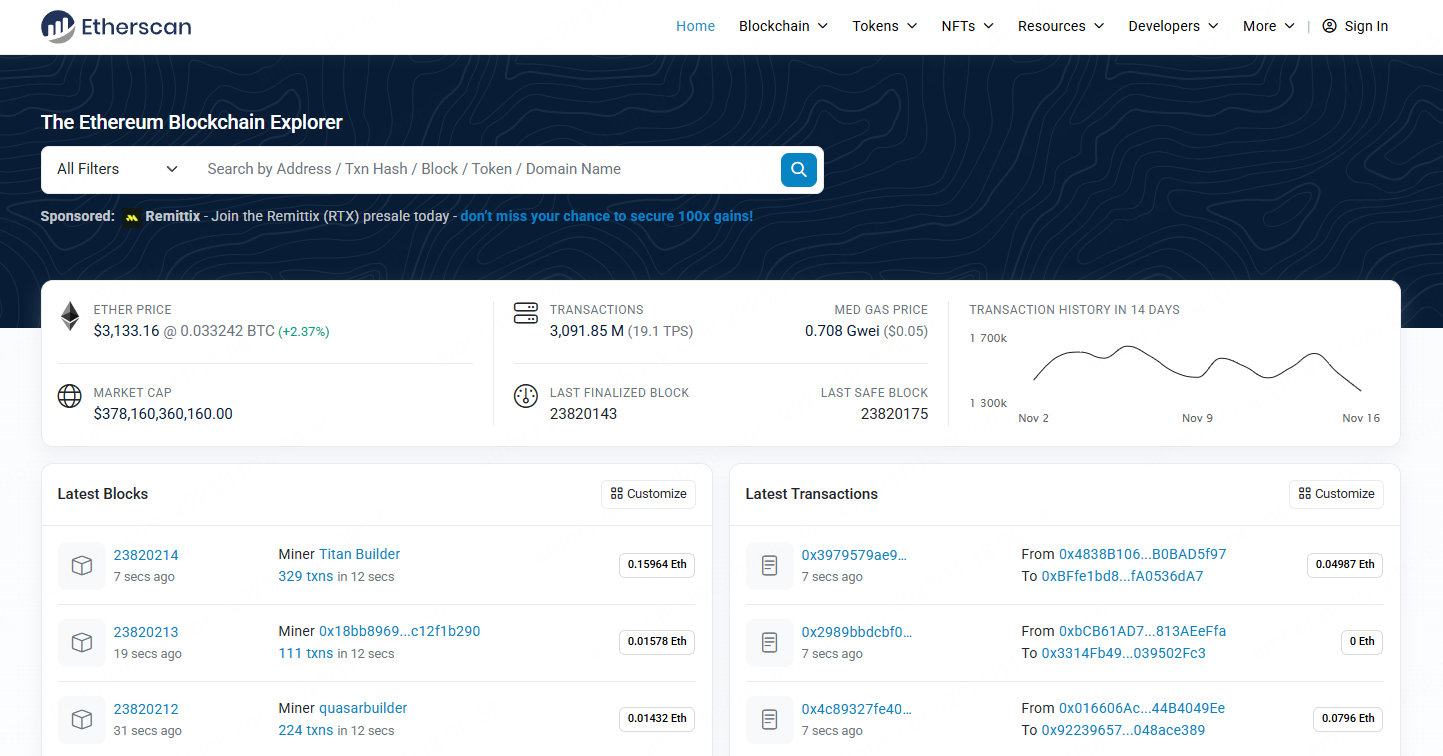
Wallet address searches and transaction lookups, Etherscan
Transaction lookups work through unique Transaction Hashes (TxHash). Each transaction on Ethereum gets its own identifier. When you enter a TxHash, Etherscan shows the wallets involved in the transaction. It displays the gas fees paid and the amount of cryptocurrency transferred. You can also see whether the transaction is pending or confirmed. The block number where the transaction was recorded appears as well.
Smart Contract Features on Etherscan
Smart contracts represent a major component of Ethereum's functionality. Etherscan provides comprehensive tools for interacting with these contracts. Users can search for any contract address to view basic information and all related transactions.
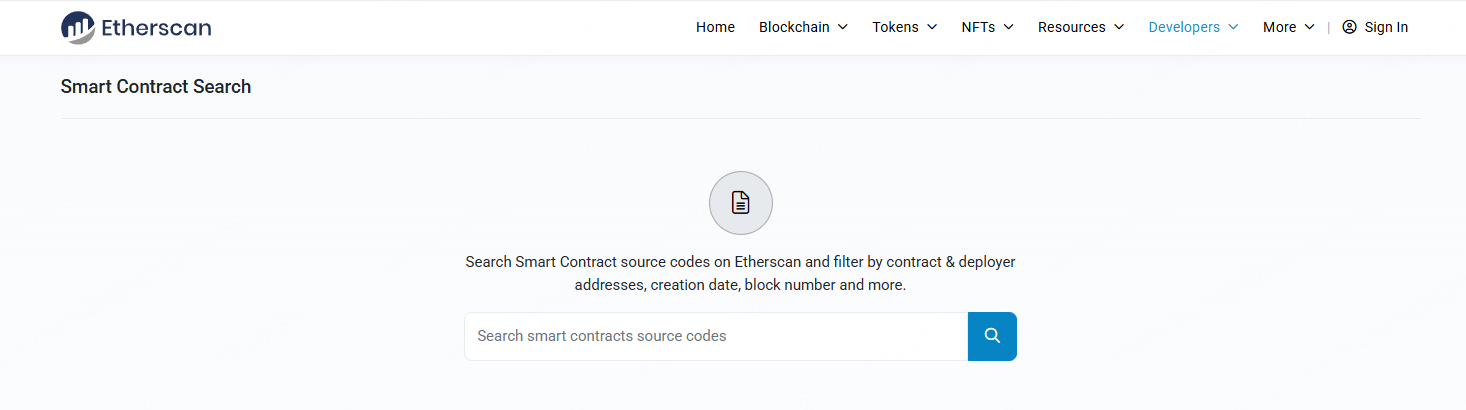
Smart Contract Search, Etherscan
Verified smart contracts offer additional features. You can view the complete source code when a contract is verified. This transparency helps developers and users understand exactly how a contract works. The platform lets you read real-time information from contracts. For example, you can check token balances or see current members of a decentralized organization.
Etherscan also enables direct contract interaction. Users must log in with a Web3 wallet like MetaMask to use this feature. Once connected, you can execute contract functions directly through Etherscan's interface. This eliminates the need for specialized technical knowledge or custom interfaces.
Gas Tracker and Fee Management Tools
The Etherscan Gas Tracker displays median gas fees at any moment. Gas fees represent the cost of executing transactions on Ethereum. The tracker shows different fee levels for low, average, and high-speed transactions. Users can choose their preferred speed based on urgency and cost considerations.
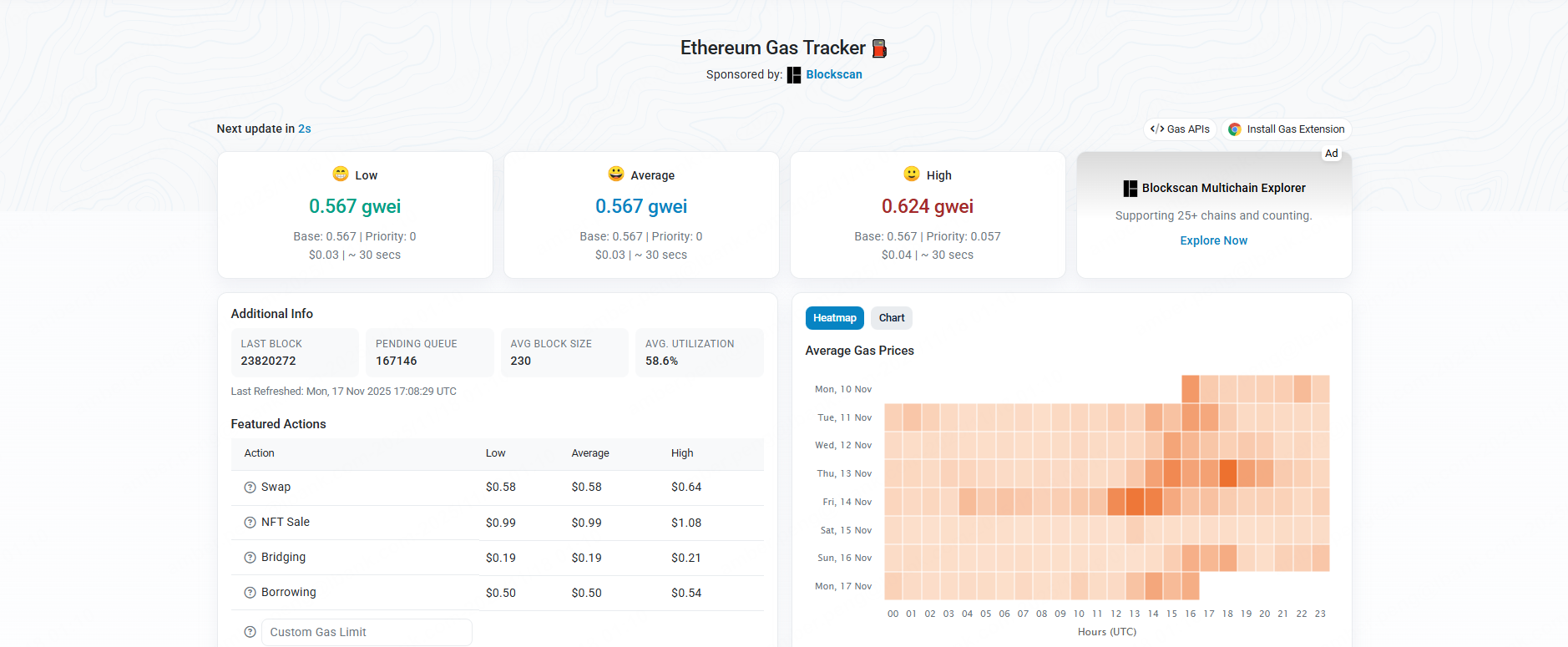
Ethereum Gas Tracker, Etherscan
Understanding gas fees helps users time their transactions better. During network congestion, fees rise significantly. The Gas Tracker helps identify quieter periods when fees drop. This tool becomes especially valuable for large transactions or frequent traders who want to minimize costs.
Using Etherscan for On-Chain Analysis
Blockchain explorers like Etherscan serve as essential tools for on-chain analysis. Traders and analysts use this data to make informed decisions about ETH and other cryptocurrencies. The platform provides several key metrics that indicate network health and potential price movements.
Transaction volume shows whether demand for the Ethereum network is increasing or decreasing. Higher transaction volumes often correlate with increased network activity and potential price appreciation. Exchange flows track cryptocurrency movement into or out of major exchanges. Large inflows to exchanges might signal selling pressure. Outflows suggest accumulation phases.
Active addresses measure network growth by counting wallets that actively transact. Rising active addresses indicate growing adoption. Declining numbers might suggest reduced interest. Some investors also track whale wallets - addresses holding significant amounts of ETH. Whale movements can influence market sentiment and price action.
Etherscan History and Development Timeline
Matthew Tan founded Etherscan and launched it in August 2015. He remains the CEO today. The platform operates independently and has no affiliation with the Ethereum Foundation. This independence allows Etherscan to maintain neutrality while serving the entire Ethereum ecosystem.
Etherscan API Services and Developer Tools
Etherscan processes more than 1 billion API calls daily across Ethereum and supported chains. The API provides programmatic access to blockchain data for developers building applications. Basic API access includes gas price lookups and fundamental statistics. This free tier requires attribution but comes without warranties.
The pro version offers enhanced capabilities for serious developers. Additional endpoints provide more detailed data access. Higher rate limits ensure applications can scale without interruption. Professional support helps developers resolve issues quickly. These features make the pro API suitable for building robust decentralized applications.
Developers use Etherscan APIs for various purposes:
- Portfolio tracking applications
- Trading bots requiring real-time data
- Analytics dashboards for DeFi protocols
- Wallet applications needing transaction history
- Tax reporting software for cryptocurrency trades
Security Risks and Address Poisoning Scams
Address poisoning represents a significant security risk when using Etherscan. Scammers send small transactions from addresses that closely resemble legitimate wallet addresses. These fraudulent addresses appear in transaction histories alongside real transactions.
The scam works through human error. Users sometimes copy addresses from their transaction history without careful verification. If they copy the scammer's similar-looking address, they send funds directly to the attacker. Recovery becomes impossible since blockchain transactions are irreversible.
Protection requires vigilance. Always double-check the complete wallet address before sending transactions. Never rely on partial address matching. Use address whitelisting features when available in your wallet. Save frequently used addresses with clear labels. These practices minimize the risk of falling victim to address poisoning.
Etherscan vs Bscscan Comparison

Etherscan and Bscscan share the same development team and similar interfaces. However, they serve fundamentally different blockchains with distinct characteristics. Understanding these differences helps users choose the appropriate platform for their needs.
The core trade-off involves performance versus decentralization. BSC achieves faster speeds and lower costs through its centralized validation system. Ethereum prioritizes security and decentralization, resulting in higher fees but greater trustlessness. Users must decide which characteristics matter most for their specific use cases.
Multichain Expansion and Blockscan Explorer
Etherscan expanded beyond Ethereum through strategic acquisitions and new product launches. The 2024 acquisition of Solscan brought Solana blockchain data under the Etherscan umbrella. This move signaled the company's commitment to multichain data accessibility.
Blockscan Multichain Explorer represents the culmination of this expansion strategy. The platform aggregates data from multiple blockchains in one interface. Users can track assets and transactions across different networks without switching between explorers. This unified approach simplifies portfolio management for users holding assets on multiple chains.
The multichain strategy addresses a real user need. Most cryptocurrency users now interact with multiple blockchains. They hold assets on Ethereum, trade on BSC, and explore new opportunities on emerging chains. Blockscan eliminates the friction of managing multiple explorer bookmarks and learning different interfaces.
Seiscan Launch and Sei Blockchain Integration
Etherscan recently launched Seiscan to support the Sei blockchain. Sei operates as an EVM-compatible network, making integration straightforward. Etherscan adapted its proven interface to provide familiar tools for Sei users. The platform tracks on-chain activity, wallet addresses, transaction details, and smart contract information on Sei.
The timing aligns with rapid Sei ecosystem growth. Total Value Locked on Sei increased from $5 million at the start of 2024 to $560 million. Trading activity remains strong with $1.3 billion in August volume. These metrics indicate genuine adoption and usage rather than speculative interest.
Seiscan provides critical infrastructure for the Sei ecosystem. Builders and protocols gain access to established Etherscan APIs and analytics tools. Thousands of DeFi protocols already rely on these services for Ethereum. The same proven technology now supports Sei's continued development. This infrastructure reduces barriers for developers considering deployment on Sei.
Future Outlook for Blockchain Explorers
Blockchain explorers continue evolving beyond simple transaction tracking. Modern explorers integrate advanced analytics, cross-chain functionality, and sophisticated developer tools. Etherscan leads this evolution through continuous feature development and strategic expansions.
The platform's Explorer as a Service model enables other blockchains to leverage Etherscan's technology. This approach standardizes blockchain exploration across different networks. Users benefit from consistent interfaces and features regardless of the underlying blockchain. Developers can build applications that work seamlessly across multiple chains.
As blockchain technology matures, explorers become essential infrastructure. They provide transparency that builds trust in decentralized systems. They offer tools that enable sophisticated on-chain analysis. They create accessibility that brings blockchain technology to mainstream users. Etherscan's continued innovation ensures these benefits extend across the expanding multichain ecosystem.