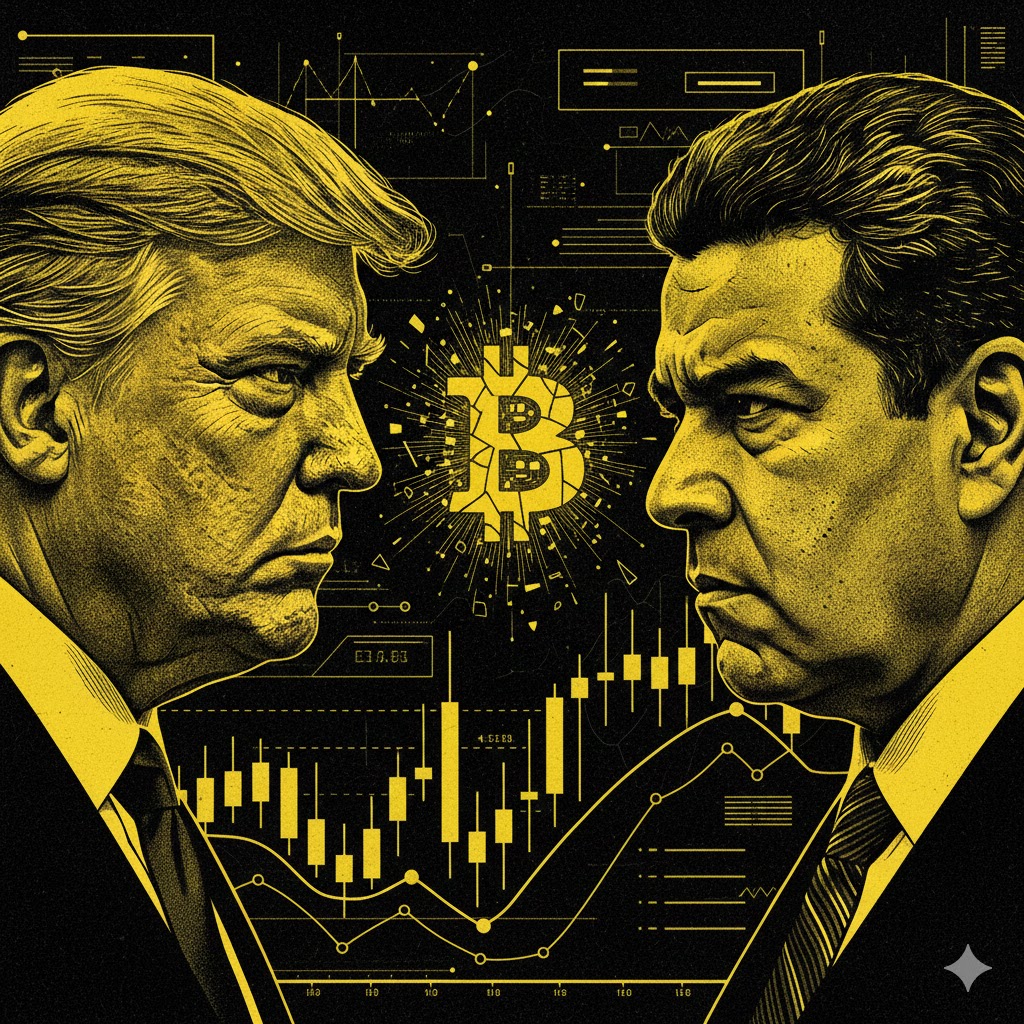
On January 3, President Trump announced that American soldiers had arrested Venezuelan Dictator Nicolás Maduro. After this announcement, the price of bitcoin quickly rose above $93,000 within just a few hours, and the entire cryptocurrency market gained approximately $100 billion within just three days. Ether increased by 7%, Solana did 8%, XRP also did 10%, and Cardano rose by 8%, which was surprising to see since the end of 2024 was marked with a low level of confidence for the markets. There was, however, something much larger involved in Maduro's capture than just making an arrest.
Intelligence agencies have suggested that Venezuela may have up to 660,000 (or more) "shadow" bitcoin reserves valued at between $60 billion and $67 billion. These reserves would place Venezuela on level with some of the largest bitcoin holders in the world, such as MicroStrategy (673,783 BTC worth about $62 billion) and BlackRock's Bitcoin ETF. In fact, the amount of bitcoin owned by Venezuela could account for approximately 3% of all of the bitcoin that is currently in circulation.
The future of what others may do with the use of this technology is already determined. It has been demonstrated by way of one nation who successfully implemented the strategic use of Bitcoin without creating an adverse impact on its economy. The potential of this technology to affect the future of the cryptocurrency market will far exceed any effect created by the current volatility.
How Venezuela Built a $60 Billion Bitcoin Position
Venezuela began purchasing Bitcoin in 2018 due to the inability of the Maduro administration to transfer money across international borders as a result of economic sanctions imposed by the United States on Venezuela's economy. In exchange for gold mined in the Orinoco mining region of Venezuela, the Maduro regime received approximately 400,000 bitcoins, valued at around $5,000 each, via the trade of approximately $2 billion worth of gold over a period of three years.
In early 2023, the Venezuelan oil company PDVSA ceased accepting payment for crude oil in U.S. Dollars and began accepting it in Tether (USDT). PDVSA then responded by immediately converting the USDT received to Bitcoin in order to mitigate the risk of having their digital wallets frozen by banks in the U.S. In addition to converting Tether into Bitcoin, other investors in Venezuela also began, and will continue to add additional coins through state-run mining efforts in Venezuela that contribute to the overall supply of Bitcoin. Through these combined efforts, in spite of international restrictions on Venezuela's economy, by 2025 approximately 0.6% of the global Bitcoin hash rate will be attributable to Venezuela, and the government is expected to hold roughly 600,000 bitcoins through these combined efforts.
The Crypto Adoption Reality Nobody Expected
The government's initiative to purchase from Venezuela reveals half of what is going on within the country. Due to a lack of other options available to them, Venezuelans began using Bitcoin and stablecoins. In 2025, Bitcoin accounted for approximately 10 percent of grocery payments, 40 percent of peer-to-peer transactions, and USDC made up approximately 10 percent of the total cash inflows into Venezuela. Between July 2024 and June 2025, Venezuela was 17th in the world and 5th in Latin America in terms of cryptocurrency usage at approximately $45 billion in total transactions.
This situation was a direct response to the debilitating impact that hyperinflation was having on the value of the bolívar, where the bolívar was losing 75 percent of its value approximately every six months. Many Venezuelans used Bitcoin and USDT to preserve their wealth from the negative economic consequences caused by hyperinflation. Therefore, this example illustrates that cryptocurrency functions exactly as it is intended to. Many independent economists from Venezuela were arrested for releasing accurate information regarding inflation, so many Venezuelans relied solely on Bitcoin and USDT for a reliable means of safely storing wealth.
The importance of cryptocurrency during an economic disaster is evident in the example of Venezuela. When the government started placing stricter capital controls on foreign currency and placed barriers to energy exports, there was a dramatic increase in the demand for Bitcoin from those in Venezuela trying to access foreign currency. The example of Venezuela shows that countries can utilize large amounts of cryptocurrency without having a direct government mandate to do so, but rather due to the need to use cryptocurrency to bypass an inept and broken traditional financial system.
What Happens to 600,000 BTC?
The U.S. government has three options, each of which could have a big effect on the market:
Scenario 1: Putting the Strategic Reserve Together
Trump's pro-crypto administration might tell the Treasury to keep the seized Bitcoin as a permanent asset of the state. This would turn a narco-terrorism seizure into the start of a U.S. Strategic Bitcoin Reserve, taking 3% of the circulating supply out of circulation for good. QCP Capital said, "The fact that the U.S. could add any seized BTC to its own strategic reserve makes it less likely that people will be forced to sell and shows how important Bitcoin is becoming in international competition."
Scenario 2: A Legal Freeze
When two people disagree over who owns something, the assets stay frozen in court for five to ten years. This effectively locks up supply, which puts long-term bullish pressure on the market because Bitcoin isn't available during important years for adoption.
Scenario 3: Closing Down
A quick sale like Germany's 50,000 BTC dump in 2024, which caused the market to drop by 15–20%. Venezuela has twelve times as much. If you dumped 600,000 BTC, prices would fall so much that the assets that were taken would lose all of their value. This is the least likely scenario, according to experts.
No matter what happens, Maduro's arrest probably means these coins won't be available for years. Even though it's not clear who owns it legally, the market effect is clear: Exchanges won't have 600,000 BTC for a long time.
The Sovereign Overhang
Venezuela's precarious banking situation has many analysts and bitcoin investors concerned about the growing existence of "dark pools" of bitcoins owned by the government. Venezuela is unique in that it has been able to obtain nearly $60 billion worth of bitcoins as a single, isolated nation without effective access to the international banking community. Prior to Venezuela's shameless acquisition of such vast amounts of cryptocurrency, countries such as North Korea, Iran, and Russia were also said to be accumulating significant amounts of cryptocurrency without sufficient transparency.
One term that describes part of the sovereign overhang is "sovereign overhang." This concept encompasses reserves maintained by a state that remain undisclosed until there is a shift in the state (whether through a change in government, natural disaster or war), at which time the reserves will be publicly available. It is also important to understand that it is likely that many countries currently hold significant reserves of bitcoins that the market does not know of.
Alex Saab has been reported as being one of the architects of Venezuela's bitcoin acquisition strategy and has worked as an agent of the Drug Enforcement Administration since 2016, providing information to the DEA regarding allegations of Venezuelan money laundering. It is also unknown how many sovereign positions the United States intelligence community tracks and when potential reserves may become available during future political or civil unrest situations.
The Crypto Market Lesson
Bitcoin went up past $93,000 not in spite of geopolitical chaos, but because of it. Venezuela's case proved important ideas in crypto: Bitcoin is a form of money that works when traditional methods fail, protects wealth during hyperinflation, and works when other systems fail.
The market's $100 billion rise in just a few days shows that both institutional and retail investors see geopolitical utility as real price support, not just a fad. Bitcoin worked just like it was supposed to for millions of Venezuelans, and maybe even for the government of Venezuela.
Sovereign adoption is no longer just a theory. It's reality that the market needs to be revalued. Intelligence estimates place Venezuela's holdings at 600,000-660,000 BTC, valued between $60-67 billion, representing approximately 3% of circulating supply. If the U.S. adds Venezuela's Bitcoin to its strategic reserves or freezes it in court, prices will probably go up because there will be less of it available. The worst-case liquidation scenario seems unlikely because it would destroy the value of assets that authorities have worked hard to protect for years.
Venezuela's $60 billion Bitcoin position isn't just a price driver; it's proof that permissionless money works when nothing else can.