Why Buying Concert Tickets Is Broken
You've probably complained about how miserable the ticket purchase process has been for years, and for good reason no more than 40% of tickets are purchased as soon as they are available thanks to bots. The remaining tickets are scalped for 5 times their original cost, which doesn't help real fans either. This method creates the illusion of having a legitimate ticket for yourself when in fact it was sold from your friend who bought four tickets and was left behind. How many times have you been left empty-handed because your friend couldn't attend and you were unable to find a legitimate way to trade your ticket for something else? How many times have you received a fake or counterfeit ticket in the mail or via e-mail? The same issue with regards to tickets being sold and traded, because you don't want to take the chance of being left with a counterfeit ticket.
NFT ticketing is designed to provide a better option than what exists today through the use of digital tickets based on the blockchain. While many NFT ticketing platforms have been created, it is important to focus on the functionality of the specific NFT ticketing systems before you decide which one will work best for you.
How NFT Tickets Actually Work in Practice
Digital tickets, like those from Ethereum or Solana, exist on the blockchain as unique passcodes that can't be duplicated. Each has a unique ID number assigned to it when purchased, stored in a digital wallet on your phone, and recognised by the venue where you scan the QR code or present your digital wallet for entry. Once scanned at that venue, a ticket becomes "used" on the blockchain, with no opportunity to resell it. If someone wants to emulate a physical ticket without actually having purchased one, they could take a picture of the traditional QR code and sell copies to many other people. The blockchain has built-in security measures through encryption that authenticate true ownership of digital tickets, significantly reducing fraudulent activity against them.
How NFT Tickets Reduce Scalping Incentives
Scalpers are the worst kind of people. Ticketmaster says they stop 200 million bots per day, but nonetheless scalpers still get big quantities and sell them for ridiculous prices.
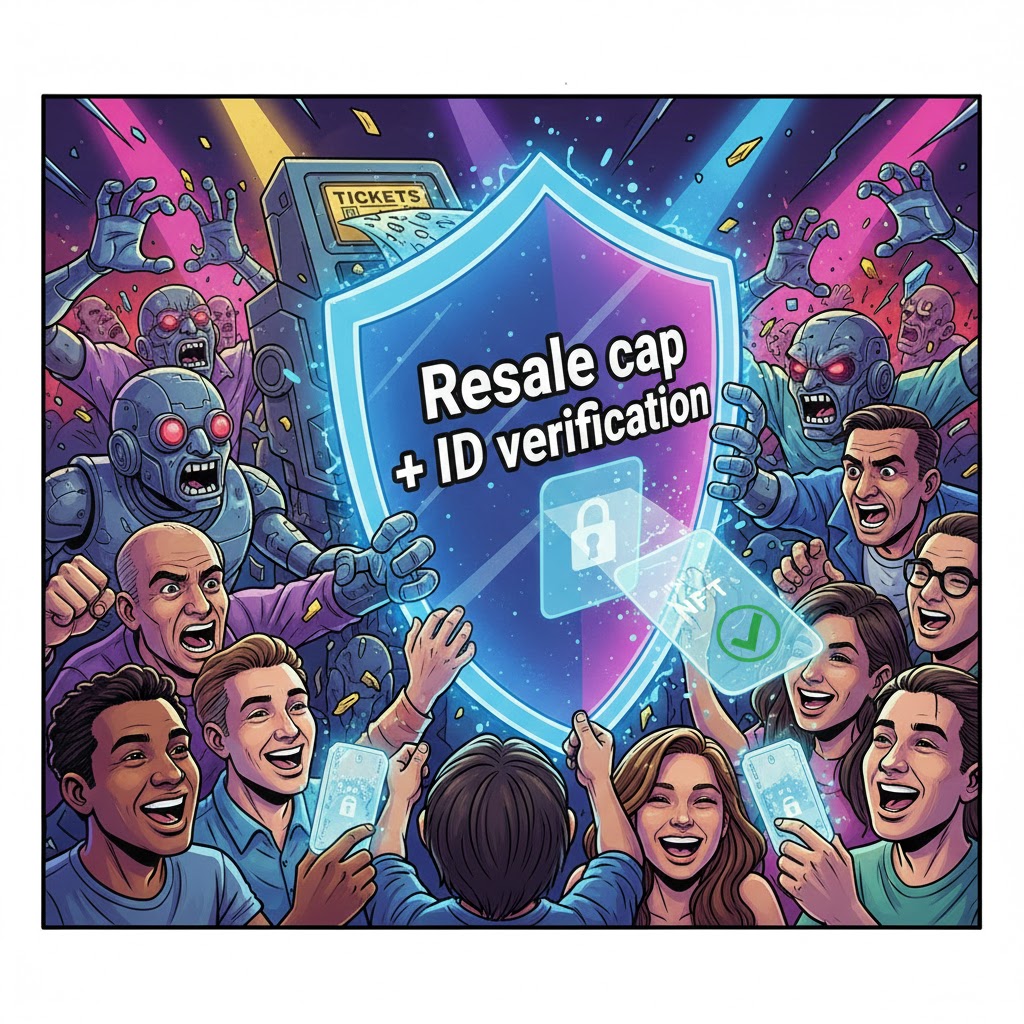
Smart contracts, which are small pieces of code that enforce rules, help NFT tickets fight back. The venue or artist can say things like "no reselling for more than 20% above face value." Some services, like GUTS Tickets' GET Protocol, link tickets to verified IDs and wallets, which makes it harder for bots to buy a lot of them at once. And what about money made from reselling? They can be split up so that artists and venues get a share instead of a random broker getting rich.
Does it halt scalping for good? No, determined scalpers find ways around it, including generating a lot of wallets or executing dirty financial trades in person outside of the network. But it makes the whole operation a lot less profitable and a lot more irritating for them.
How NFT Tickets Eliminate Counterfeit Tickets
A lot of performances still have fake paper tickets and copied barcodes. NFT tickets stop that because the blockchain lets anyone check right away if it's authentic and valid. Fans who buy tickets on the secondary market may check the ticket's history before paying, so they don't have to worry about getting a fake one.
Why NFT Tickets Could Become Digital Collectibles
Here is where the magic happens: The NFT ticket doesn't just get you in the door; it gives you something permanent that says "I was there." Plus, artists will be able to add all kinds of cool stuff later – things like exclusive music, behind-the-scenes videos, access to secret fan groups, early access to tickets to future shows, etc.
Remember Coachella's Lifetime VIP NFT? That was a way of saying you could have everything VIP every time you went to Coachella. It turned your ticket from being a ticket into a membership card that always had something. You could create a digital scrap book of every show you attended. Could you imagine being able to create a digital scrap book of all the shows you've seen? Artists will also be able to create automatic royalties, so they earn a small amount every time their NFT is sold (instead of scalpers taking it all).
The Biggest Problems NFT Ticketing Has Not Solved
Not everyone is prepared for this process. There are many more fans without cryptocurrency wallets than there are who have them, and many would rather not deal with the hassles of managing them. Some companies have created "Email Wallet" solutions to alleviate the stress of managing wallets, but this goes against every principle.
Lost access to your wallet? Forget it. There's no way to reset the password in blockchain technology. And globally? There are so many different regulations for ticketing with Bitcoin in different countries; large scale events may have a problem with their ticketing system. Ticketmaster works best because of their exclusive partnership with major venues, not because of their superior technology. For the foreseeable future, ticketing will primarily occur at crypto-curious or experimental events until large arenas encourage the use of NFT for tickets.
NFT Ticketing Adoption in 2026
The rise of NFT ticketing continues to grow in popularity. GET Protocol has handled large volumes of tickets for many thousands of events; however, ticketing platforms such as Yellowheart (known for a focus on music festivals), SeatlabNFT and Belong are developing interfaces to provide a more friendly experience that isn't just for "crypto bros." Coachella, Tomorrowland and other festivals have tested the waters with an NFT ticketing experience, particularly in the case of VIP and specialty access; however, NFT ticketing is not yet common for the majority of general admission tickets. Many of the companies that put fans first have been able to succeed by making it easier to purchase and manage tickets (often accepting credit cards) while allowing attendees to enjoy their concerts without having to understand the technology behind the blockchain.
Do NFT Tickets Actually Improve the Concert Experience?
The use of NFT tickets (non-fungible tokens) can resolve three primary concerns with ticket sales: scalping, fake tickets, and the fact that a concertgoer receives nothing after attending a concert. So, NFT technology is now proven to be effective as evidenced by the fact that over one million ticket purchases have been processed through NFT ticketing without any significant issues.
However, for NFT ticketing to gain large-scale acceptance, two things need to happen: The ability for the majority of the population to access their crypto and wallet addresses without knowing it. And, NFT ticketing gains support from major concert venues.
The future will consist of a combination of two available options for the general public. On one hand, NFT authentication technology will operate in the background, providing the most secure form of authentication and to provide value to concertgoers and promoters regarding their existing assets; while, on the other hand, many concertgoers and attendees will continue to receive simple paper tickets or QR codes for ticket purchase.
For an artist or a promoter, being able to block scalpers or get their money back from scalping is a compelling reason to consider NFT ticketing as an option. Ultimately, the success of NFT ticketing is contingent upon how much "better" NFT ticketing feels compared to what attendees experience when they attend concerts today. Given the current state of concerts, many of us believe NFT ticketing is a great opportunity moving forward.